


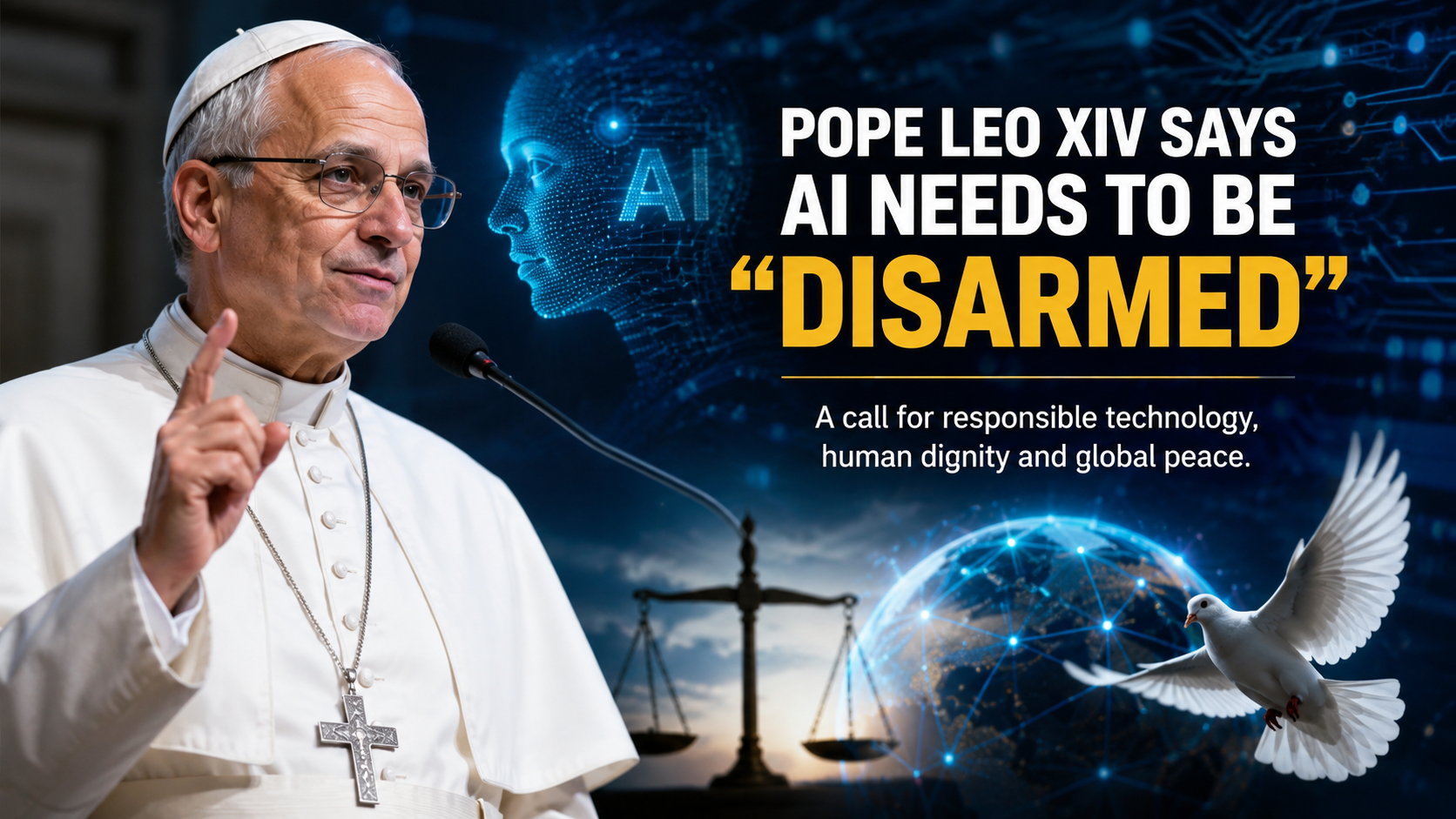
Pope Leo XIV AI discussions are gaining global attention as artificial intelligence becomes increasingly powerful and influential in modern society.
Artificial intelligence is becoming one of the most powerful technologies in modern society, transforming everything from business and education to healthcare, communication and national security. But as AI systems become more capable, questions about who controls them and how they are used are becoming increasingly important.
Pope Leo XIV has entered this global conversation with a strong warning: artificial intelligence needs to be “disarmed.”
The statement does not mean that artificial intelligence itself should be eliminated or that technological development should stop. Instead, the Pope is using the word “disarmed” to describe the need to prevent AI from becoming a tool of domination, exclusion, warfare or uncontrolled technological competition.
His position was presented alongside his first encyclical, Magnifica Humanitas, which examines the challenges artificial intelligence creates for human dignity, society and the future of technology.
What Does It Mean to “Disarm” Artificial Intelligence?
The Pope Leo XIV AI debate is not simply about technology itself. It is about how artificial intelligence should be developed, controlled and used in society.
The word “disarm” may sound unusual when applied to software and algorithms. However, Pope Leo XIV uses the term in a broader ethical and social sense.
According to the Vatican’s official text, disarming AI means freeing it from a mentality of competition that seeks increasingly powerful algorithms, larger datasets and greater geopolitical or commercial dominance. It also means preventing technological power from automatically becoming political or social power.
In other words, the concern is not simply whether AI is powerful.
The bigger question is who controls that power and what they choose to do with it.
AI can be used to improve productivity, assist doctors, translate languages, support scientific research and help people access information. But similar technologies can also be used for surveillance, discrimination, manipulation or military applications.
This is why the debate surrounding AI is increasingly moving beyond technology itself and toward questions of responsibility and governance.
AI and the Risk of Autonomous Weapons
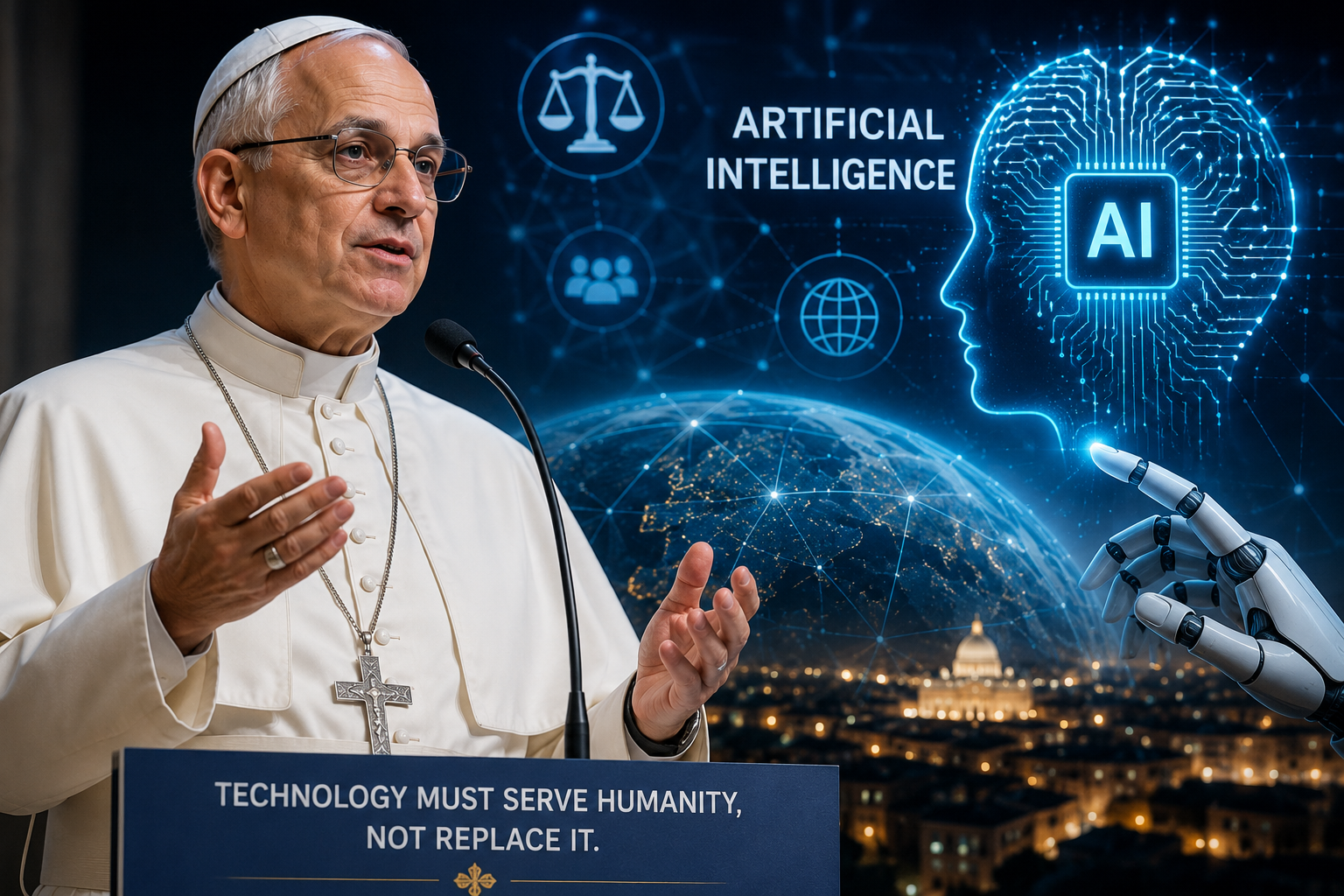
One of the strongest concerns surrounding artificial intelligence is its growing role in military technology.
AI systems can process enormous amounts of information and make decisions at speeds that humans cannot match. When such capabilities are connected to weapons systems, the consequences can become extremely serious.
The Pope has specifically expressed concern about increasingly autonomous weapons systems that could operate beyond effective human control. He has argued that decisions involving human life must remain connected to human conscience and responsibility.
This issue is also receiving attention from humanitarian organizations and technology experts. The debate centers on whether machines should ever be allowed to independently select and attack human targets.
The concern is simple: if an algorithm makes a deadly decision, who is ultimately responsible for that decision?
AI Should Serve Humanity, Not Replace Human Responsibility
Pope Leo XIV’s argument is not necessarily anti-technology.
In fact, the Vatican’s official explanation makes an important distinction: disarming AI does not mean rejecting technology. It means preventing technology from dominating humanity.
This distinction is important because artificial intelligence is already providing significant benefits.
AI can help businesses analyze information, help students learn, support programmers, improve accessibility and accelerate scientific research. It can also help organizations process large amounts of information more efficiently.
The challenge is making sure that these benefits remain connected to human values.
Technology should be a tool that helps people make better decisions—not a replacement for human responsibility.
The Problem of Concentrated AI Power
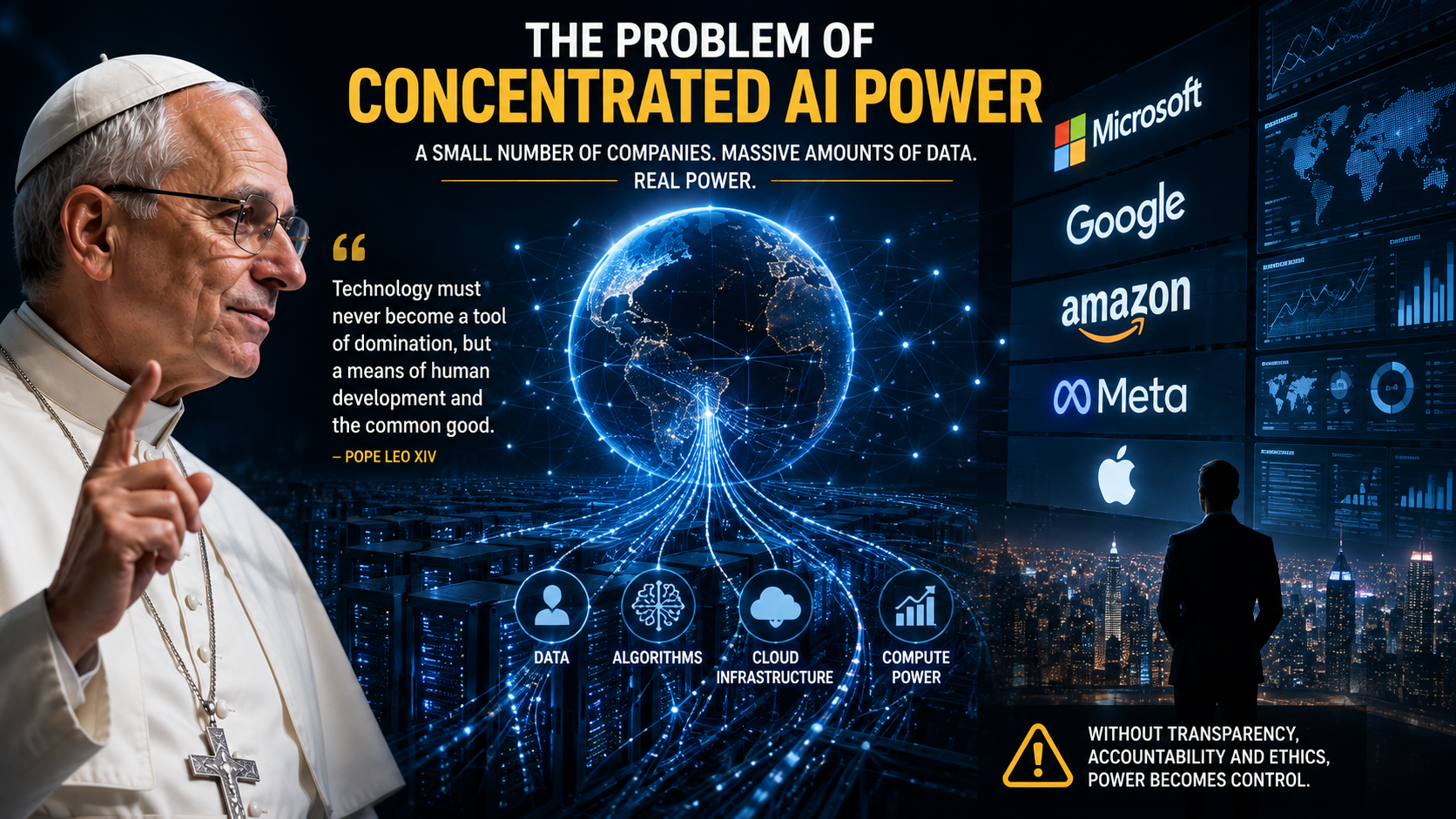
Another important part of the discussion is the concentration of technological power.
The development of advanced AI requires enormous amounts of computing power, data, infrastructure and financial investment. As a result, a relatively small number of major technology companies and institutions have significant influence over the direction of AI development.
Pope Leo XIV has warned against allowing technological power to become concentrated in the hands of a privileged few. His encyclical argues for greater discussion, transparency and participation in decisions concerning AI.
This raises an important question for governments around the world:
Who should decide the rules governing artificial intelligence?
Should the decisions be made exclusively by technology companies? Governments? International organizations? Scientists? Or should society as a whole have a voice?
The answer will likely require cooperation between all of these groups.
Why AI Regulation Matters
As AI becomes more influential, regulation is becoming an increasingly important part of the global technology debate.
Regulation can address issues such as data protection, discrimination, transparency, safety and the use of AI in high-risk environments.
However, regulation alone may not solve every problem.
The Vatican’s position is that AI also requires ethical responsibility. Developers need to consider the consequences of the systems they create, while governments and institutions need to ensure that technology remains aligned with human dignity and the common good.
This means that the future of AI will not be determined only by engineers.
It will also be shaped by lawmakers, educators, businesses, researchers and ordinary citizens.
A Global Debate About the Future of AI
The message from Pope Leo XIV arrives at a time when artificial intelligence is developing at extraordinary speed.
Generative AI systems can already create text, images, software and other forms of digital content. Meanwhile, AI is being integrated into financial systems, healthcare, education, transportation, defense and communication.
These developments create enormous opportunities, but they also create new responsibilities.
The central question is no longer simply “What can AI do?”
It is becoming:
“What should AI be allowed to do?”
That distinction could define the next stage of the AI revolution.
What This Means for the Future
Pope Leo XIV’s warning provides another perspective in a debate that is often dominated by technology companies and governments.
His message focuses on the human being.
Artificial intelligence should not be viewed simply as a race to build increasingly powerful systems. Instead, technological progress should be evaluated according to its impact on human dignity, freedom, equality and peace.
The Vatican’s official text emphasizes that AI should remain human-friendly, accessible and subject to responsible decision-making.
For the technology industry, this means that innovation and responsibility will need to develop together.
For governments, it means creating rules capable of protecting people without unnecessarily preventing useful innovation.
And for society, it means becoming more informed about how artificial intelligence is changing the world.
Conclusion
Pope Leo XIV’s statement that artificial intelligence needs to be “disarmed” is ultimately a warning about human responsibility, rather than a call to destroy AI.
The technology itself can provide enormous benefits. But its impact will depend on how it is developed, controlled and deployed.
AI can become a powerful tool for education, scientific research, healthcare, communication and economic development. At the same time, without adequate safeguards, it can also contribute to inequality, manipulation, surveillance and autonomous warfare.
The challenge facing humanity is therefore not simply to build more advanced artificial intelligence.
It is to ensure that human beings remain responsible for the power they create.
As AI continues to transform the world, the most important question may not be how intelligent machines can become—but whether humanity can develop the wisdom necessary to use them responsibly.
