


The enterprise project management landscape is undergoing a massive shift. With the groundbreaking Jira AI update announced on February 25, 2026, Atlassian has officially blurred the line between human employees and artificial intelligence. Consequently, this latest release introduces “Agents in Jira,” allowing AI agents and human workers to collaborate side by side within the exact same workflows.
This is not just another experimental chatbot feature. Instead, it is a fundamental transformation of how enterprise teams operate. Organizations can now assign tasks to AI exactly as they would to a human colleague. Therefore, the Jira AI update moves artificial intelligence from a passive conversational tool into an accountable, active participant in your daily operations.
In this comprehensive guide, we will explore how this update works. Furthermore, we will examine the technology behind Atlassian Rovo, the Model Context Protocol (MCP), and how your team can leverage these features for maximum productivity.

What is the Latest Jira AI Update?
Historically, AI in project management felt disconnected. Teams had to leave their workspace, open a separate AI tool, and manually copy data back and forth. However, the latest Jira AI update changes this paradigm entirely. Atlassian’s open beta for “Agents in Jira” brings autonomous software helpers directly into the heart of team workflows.
Because these agents operate natively within the platform, they respect existing project configurations. Additionally, they follow your established permissions, audit trails, and approval flows. As a result, agent-driven work is no longer detached or fragmented. It is fully visible and coordinated alongside human efforts.
According to Tamar Yehoshua, Chief Product and AI Officer at Atlassian, people are orchestrating work across cross-functional teams and tools faster than ever. Without clear coordination, that speed can easily turn into chaos. Therefore, this Jira AI update gives companies an open, governed way to make AI a true part of the team.
Moving Beyond Chatbots to Real Teammates
For the past few years, AI has dominated tech conversations. Nevertheless, most implementations have felt clunky or disjointed. Chatbots required special prompts, and automation tools needed dedicated setups.
Conversely, Atlassian is betting that the real breakthrough comes from making AI invisible. By treating AI as just another name in the assignee dropdown, they normalize the technology. In fact, this shift is exactly why the Jira AI update is considered a watershed moment for enterprise collaboration.
How AI Agents and Humans Work Side by Side
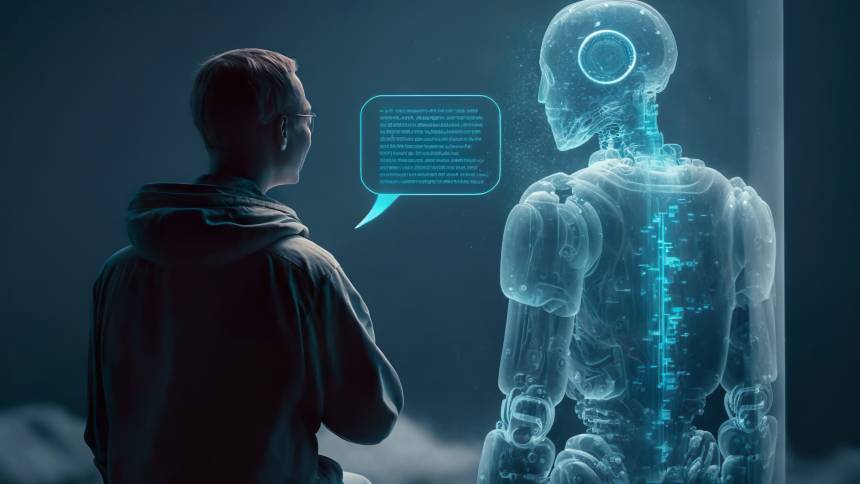
Integrating AI into daily routines requires seamless interaction. Fortunately, the Jira AI update ensures that humans and agents can work side by side without friction. Specifically, the system offers several direct methods for collaboration.
Here are the primary ways humans and AI interact under the new update:
- Direct Task Assignment: Managers can assign a ticket to an AI agent exactly the same way they would assign it to a human engineer or marketer.
- Iterative @Mentions: Team members can @mention an AI agent in the comments of an issue to request further research, code reviews, or data extraction.
- Workflow Integration: AI agents can be inserted directly into sprints. Thus, they can receive tickets, update statuses, meet due dates, and provide progress signals natively.
- Human-in-the-Loop Approvals: Agents can draft responses or code, but humans retain the final approval. Consequently, humans stay firmly in the driver’s seat.
Ultimately, this collaborative approach guarantees that AI enhances human productivity rather than disrupting it.

The Technology Powering the Jira AI Update
To make this vision a reality, Atlassian had to build a robust underlying architecture. The success of the Jira AI update relies heavily on two critical technological pillars.
Atlassian Rovo and the Teamwork Graph
At the core of this transformation is the Teamwork Graph. This sophisticated system maps the complex relationships among people, work, and knowledge across Jira, Confluence, and code repositories.
Because of the Teamwork Graph, Atlassian Rovo agents possess deep institutional knowledge. They understand the context of your specific projects. Therefore, when an agent executes a task, it utilizes a comprehensive understanding of your company’s unique operational history.
Embracing the Model Context Protocol (MCP)
In addition to native agents, Atlassian has embraced the open Model Context Protocol (MCP). This standard provides AI agents with a consistent, secure way to access tools, data, and workflows.
By leveraging MCP, companies are not restricted to Atlassian’s proprietary AI. Instead, they can integrate specialized third-party agents from platforms like GitHub or Figma directly into Jira. As a result, the Jira AI update transforms the platform into an open ecosystem for artificial intelligence.
Comparing Traditional Automation vs. Agents in Jira
Understanding the magnitude of this release requires looking at the past. Traditional automation was strictly rule-based. In contrast, the Jira AI update introduces dynamic reasoning.
| Feature | Traditional Jira Automation | New Jira AI Agents (2026) |
|---|---|---|
| Execution Style | Rigid If/Then rules | Context-aware problem solving |
| Setup Complexity | Requires complex scripting | Simple plain-language instructions |
| Collaboration | Runs silently in the background | Interactive via comments and @mentions |
| Adaptability | Fails if parameters change slightly | Adapts to ambiguous or evolving tasks |
| Ecosystem | Limited to specific app triggers | Open integration via MCP standards |
Clearly, this shift empowers teams to handle complex scenarios that traditional automation simply could not process.
Key Benefits of the 2026 Jira AI Update
Deploying AI side by side with humans offers tremendous advantages. Enterprises adopting this Jira AI update report several transformative benefits.
- Reduced Automation Sprawl: Instead of managing multiple disparate AI tools, companies can consolidate their AI activities within Jira. Consequently, this reduces software costs and complexity.
- Enhanced Accountability: Because agents operate within standard workflows, their actions are fully logged. Therefore, auditing AI decisions becomes as straightforward as reviewing a human teammate’s work history.
- Faster Issue Resolution: Agents can instantly triage bugs or answer common queries by scanning the Teamwork Graph. As a result, human experts are freed up to tackle high-level strategic problems.
- Scalable Operations: Organizations can effortlessly scale their output by spinning up new AI agents during peak workload periods.
In summary, the Jira AI update delivers speed without sacrificing managerial control.
Governance and Security: Keeping Humans in the Driver’s Seat
One of the biggest concerns with AI adoption is the fear of rogue automation. What we don’t want is agents that do 10 times the work but also create 10 times the chaos, noted Sanchan Saxena, SVP and GM Teamwork Collection at Atlassian.
Fortunately, the Jira AI update addresses these security concerns head-on. Agents have zero permission to delete or modify production code autonomously. Furthermore, any critical changes require explicit human approval before becoming permanent.
Because agents are bound by Jira’s existing permission structures, they can only access information that their human supervisors authorize. Ultimately, this stringent governance builds the trust necessary for true human-AI collaboration.
Real-World Use Cases for AI Agents in Project Management
How exactly are companies using these new capabilities? The Jira AI update unlocks several practical, day-to-day applications.
Here are some of the most effective use cases currently observed in the open beta:
- Intelligent Bug Triage: Agents automatically scan incoming bug reports, categorize them by severity, and assign them to the appropriate engineering pod.
- Drafting Acceptance Criteria: Product managers can provide a brief feature summary, and the AI agent will instantly generate comprehensive acceptance criteria based on historical specs.
- Cross-Tool Data Extraction: Using MCP integrations, an agent can pull live data from external CRM platforms and summarize it directly within a Jira service ticket.
- Automated Status Rollups: Agents can compile weekly progress reports from dozens of nested tasks, providing executives with clean, readable summaries.
Indeed, these practical applications prove that AI agents are ready for mainstream enterprise adoption.
Frequently Asked Questions (FAQ)
What exactly is the Jira AI update?
The Jira AI update, officially known as “Agents in Jira,” is a 2026 feature release that allows AI agents to be assigned tasks, managed, and tracked exactly like human team members within Jira workflows.
When was the Jira AI update released?
Atlassian announced the open beta for Agents in Jira on February 25, 2026, marking a significant milestone in enterprise human-AI collaboration.
Do AI agents replace human workers in Jira?
No, they do not replace humans. Instead, the Jira AI update is designed for humans and agents to work side by side. AI handles repetitive, data-heavy tasks, while humans provide strategic direction and final approvals.
How does Jira secure AI agent actions?
Agents operate under the same governance, permissions, and audit trails as human users. Furthermore, they cannot modify production environments without explicit human authorization.
Can I use third-party AI agents in Jira?
Yes. Thanks to the Model Context Protocol (MCP), Jira now supports seamless integration with qualified third-party AI agents from platforms like GitHub and Figma.
References
- SiliconANGLE: Atlassian embeds agents into Jira and embraces MCP for third-party integrations (Feb 2026)
- MarketScreener: Atlassian Introduces Agents in Jira to Drive Human-AI Collaboration at Enterprise Scale (Feb 2026)
Conclusion: Embracing the Future of Human-AI Collaboration
The Jira AI update represents a monumental leap forward for project management. By transitioning AI from a separate conversational tool into a native, accountable teammate, Atlassian has solved one of the biggest challenges of modern enterprise tech: integrating AI without creating chaos.
As humans and agents begin to work side by side, teams will experience unprecedented levels of productivity, clarity, and innovation. Therefore, businesses that adopt this technology early will gain a massive competitive advantage.
Are you ready to transform your workflows? Dive into your platform settings today, activate the open beta, and start building your hybrid human-AI dream team!
