


The global technology industry is entering a critical phase where artificial intelligence (AI) is expanding faster than the infrastructure needed to support it. In this context, two major semiconductor leaders Nvidia and SK Hynix are reportedly preparing a joint announcement that could reshape the AI hardware ecosystem.
While official details have not yet been released, expectations are high that the collaboration will focus on next-generation memory technologies and advanced chip integration designed specifically for AI workloads. This move comes at a time when the AI industry is facing what many experts describe as a “supply bottleneck crisis.”
The AI Boom and Its Hidden Problem
Artificial intelligence has rapidly moved from experimental research into mainstream adoption. Today, AI powers chatbots, recommendation systems, automated translation, image generation, medical analysis, and enterprise automation.
However, behind this rapid expansion lies a serious limitation: hardware supply.
Modern AI systems require enormous computing power, which depends on two key components:
- High-performance processors (GPUs and AI accelerators)
- Ultra-fast memory systems capable of handling massive data throughput
As demand for AI models increases, the infrastructure supporting them is struggling to keep pace. This imbalance is often referred to as the “AI infrastructure gap.”
Why Semiconductors Are at the Center of the Crisis
Semiconductors are the foundation of all modern computing systems. In AI, they are even more critical because training and running large models requires processing billions of calculations per second.
The issue is not just about producing more chips, but producing the right kind of chips.
Advanced AI workloads require:
- High Bandwidth Memory (HBM)
- Low latency data transfer
- Efficient energy consumption
- Integration with GPU architectures
These requirements have created a bottleneck in global supply chains, making companies like Nvidia and SK Hynix central players in solving the crisis.
Nvidia’s Role in the AI Revolution
Nvidia is widely recognized as the dominant force in AI hardware. Originally known for its graphics processing units (GPUs) used in gaming, the company has transformed into the backbone of modern artificial intelligence.
Today, Nvidia’s GPUs are essential for:
- Training large language models
- Running generative AI systems
- Powering cloud-based AI infrastructure
- Supporting scientific simulations and research
Its hardware architecture has become the industry standard for AI development. As demand grows, Nvidia’s challenge is no longer just innovation—it is scaling production fast enough to meet global needs.
SK Hynix and the Memory Revolution
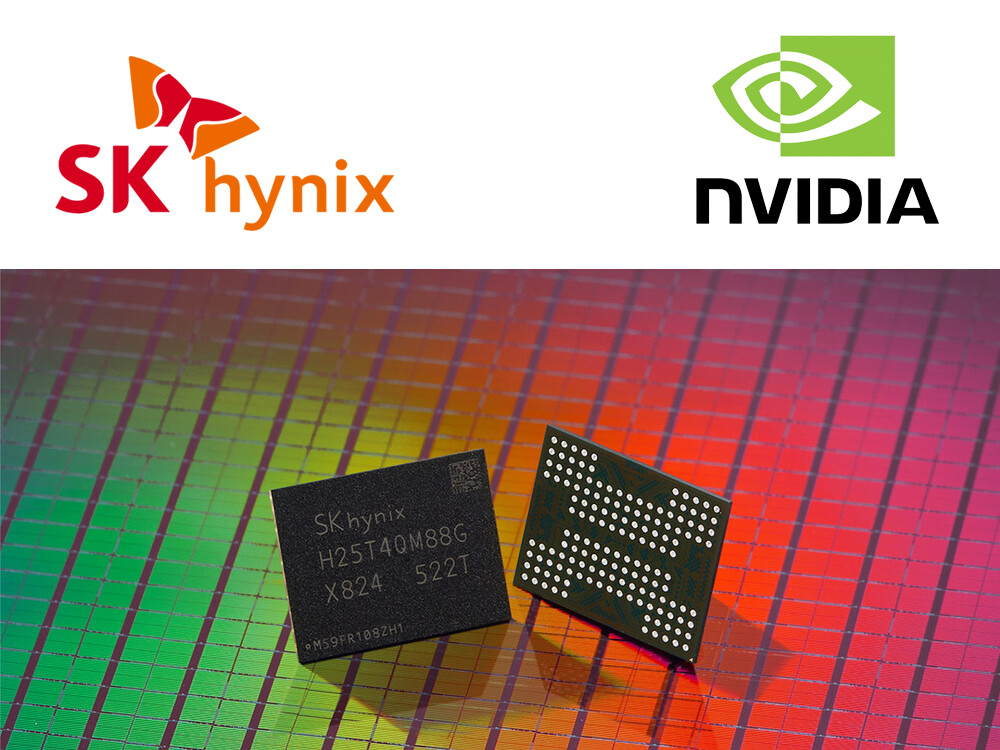
SK Hynix plays a different but equally important role in the AI ecosystem. The company is one of the world’s leading producers of memory chips, especially High Bandwidth Memory (HBM), which is crucial for AI performance.
HBM technology allows:
- Faster data transfer between memory and processors
- Reduced energy consumption per computation
- Higher efficiency in large-scale AI training systems
Without advanced memory solutions like those produced by SK Hynix, even the most powerful GPUs cannot operate at full potential.
In simple terms, if Nvidia builds the “brain” of AI, SK Hynix provides the “short-term memory” that allows the brain to function effectively.
Why This Joint Announcement Matters
A collaboration between Nvidia and SK Hynix is not just a routine business update. It signals a deeper shift in the AI hardware ecosystem.
Industry analysts suggest several possible outcomes of this partnership:
1. Next-Generation AI Memory Chips
The companies may be developing improved HBM solutions that dramatically increase data throughput for AI systems.
2. Long-Term Supply Agreements
The announcement could include strategic commitments to secure memory supply for Nvidia’s growing GPU demand.
3. Co-Optimized Hardware Design
Instead of working separately, both companies may align chip and memory architectures to maximize performance efficiency.
4. Expansion of AI Data Center Infrastructure
The partnership could support the rapid growth of global AI data centers, which require both GPUs and advanced memory systems at scale.
The Global Competition for AI Infrastructure
The AI industry is becoming a strategic battlefield for technological leadership. Countries such as the United States, South Korea, China, and members of the European Union are investing heavily in semiconductor independence and AI capability.
In this environment, companies like Nvidia and SK Hynix are not just technology providers—they are infrastructure gatekeepers.
Their decisions influence:
- Global AI development speed
- Pricing of AI services
- Availability of advanced computing resources
- Competitive advantage between tech companies
The Supply Chain Challenge
One of the biggest challenges facing the semiconductor industry is supply chain complexity. Producing advanced chips requires:
- Highly specialized manufacturing equipment
- Rare materials
- Multi-step fabrication processes
- Strict quality control standards
Even small disruptions can delay production for months. As AI demand grows exponentially, maintaining stable supply chains has become increasingly difficult.
This is one of the key reasons why partnerships between major companies are becoming more common.
Energy and Efficiency Concerns
Another major issue in the AI sector is energy consumption. Large AI data centers require massive amounts of electricity to operate. As models become more powerful, energy demand increases significantly.
Improving efficiency through better memory systems and optimized chip architecture is now a priority. Technologies developed by SK Hynix and Nvidia could help reduce energy consumption per computation, making AI more sustainable in the long term.
What This Means for the Future of AI
If the collaboration between Nvidia and SK Hynix leads to successful technological advancements, several major changes could follow:
Faster AI Development
More efficient hardware will allow researchers to train larger and more complex models in less time.
Lower Infrastructure Bottlenecks
Improved memory systems can reduce delays in AI processing pipelines.
Broader AI Accessibility
As hardware becomes more efficient, AI services may become more widely available and affordable.
Acceleration of Innovation
Industries such as healthcare, finance, transportation, and education could benefit from faster AI integration.
Risks and Uncertainties
Despite the optimism, challenges remain. The semiconductor industry is highly competitive and vulnerable to geopolitical tensions, supply shortages, and technological limits.
There is also uncertainty about how quickly new technologies can be scaled into mass production. Even if breakthroughs occur, commercial deployment often takes years.
Additionally, competition from other semiconductor companies such as AMD, Intel, and emerging Asian manufacturers could influence market dynamics.
The anticipated joint announcement between Nvidia and SK Hynix represents more than just a corporate partnership. It reflects the growing urgency to solve one of the most important challenges in modern technology: the infrastructure limits of artificial intelligence.
As AI continues to evolve at unprecedented speed, the companies that control hardware innovation will play a decisive role in shaping the digital future.
Whether this collaboration leads to a breakthrough in memory technology or a broader strategic alliance, it is clear that the next phase of AI development will depend heavily on the success of partnerships like this one.
In a world increasingly driven by data and computation, the future of intelligence may be written not only in software, but in silicon.
