


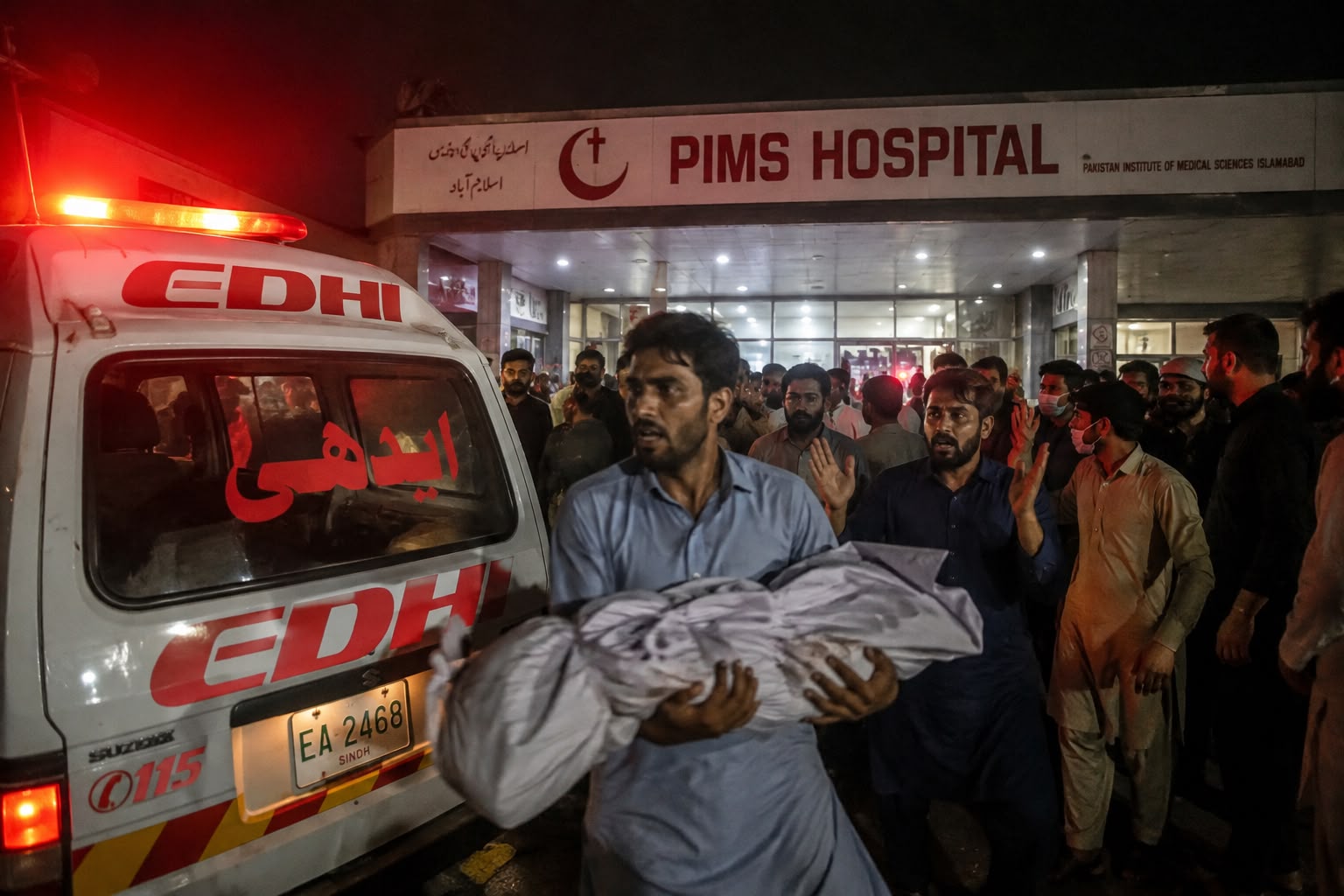
Pakistan Hospital Fire Kills 14 Newborn Babies
A devastating fire at one of Pakistan’s major public hospitals has killed 14 newborn babies, triggering national outrage and an urgent investigation into what went wrong.
The fire broke out early Wednesday, August 26, at the Pakistan Institute of Medical Sciences (PIMS) in Islamabad. The blaze erupted in the nursery on the third floor of the Mother and Child Health facility, where newborns were receiving medical care. (The Guardian)
According to officials and hospital sources, at least one baby was rescued. Initial reports indicated that around 15 newborns were in the ward when the fire started. (ABC News)
The tragedy has left families devastated and raised difficult questions about emergency procedures, fire protection and the conditions inside the hospital.
What Happened Inside the PIMS Hospital?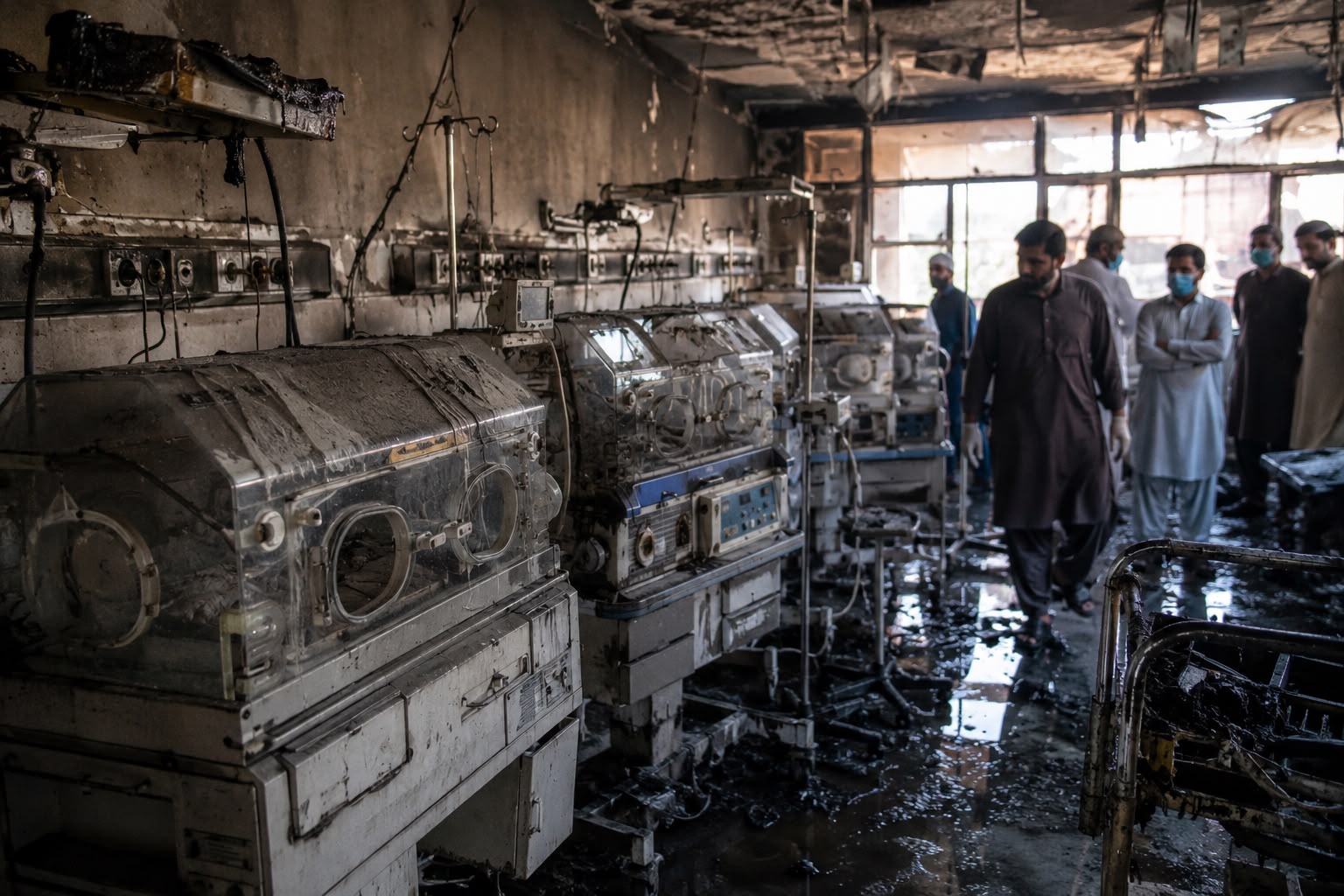
The fire reportedly started at approximately 6:45–7:00 a.m. in the nursery area.
Preliminary accounts point to an electrical problem or a malfunction involving an air-conditioning unit. Rescue officials and hospital authorities have described an apparent explosion or short circuit involving the air-conditioning system. However, the precise cause remains subject to investigation. (ABC News)
The presence of oxygen equipment in the neonatal ward may also have contributed to the rapid spread of the flames, according to Pakistan’s health minister. (HUM News English)
Emergency crews responded to the incident, with reports indicating that six fire engines and four ambulances were involved in the rescue operation. (The Express Tribune)
Despite the response, 14 newborns died.
Witnesses Raise Alarm Over a Locked Door
One of the most disturbing allegations emerging from the tragedy concerns access to the nursery.
Witnesses reportedly told the BBC that a door to the area where the babies were located was locked, potentially making it more difficult for people to reach the newborns during the emergency.
This allegation has not yet been established as an official finding. It is one of the issues that authorities will need to examine as part of the investigation.
The question is therefore not simply how the fire started, but also whether the hospital’s emergency procedures, access arrangements and fire-safety systems were adequate to protect extremely vulnerable patients.
Why Were the Babies So Vulnerable?
The newborns were receiving intensive medical care. Reports indicate that some were in incubators or receiving oxygen when the fire broke out.
Newborn babies in intensive care cannot simply be evacuated like ordinary patients. Many require continuous oxygen, monitoring and specialist medical equipment.
That makes emergency planning particularly important in neonatal units.
A fire in such an environment can become life-threatening within minutes if smoke, flames or heat spread rapidly.
Families Demand Answers
Outside the hospital, grieving families were left searching for information about their children.
The incident has generated anger and demands for accountability, particularly over whether enough staff were present and whether emergency exits and fire-safety measures were adequate.
The questions being raised include:
* Was the nursery door locked during the emergency?
* Were adequate fire exits available?
* Were emergency evacuation procedures properly followed?
* Was the fire alarm system functioning?
* Was there sufficient staff available to evacuate the babies?
* Did oxygen equipment contribute to the rapid spread of the fire?
* Were hospital authorities adequately prepared for a neonatal emergency?
These questions cannot be answered conclusively until the investigation is completed.
Pakistan Government Orders Investigation
Pakistan’s government has responded by ordering an investigation into the tragedy.
Prime Minister Shehbaz Sharif ordered a high-level inquiry and demanded that those responsible be identified if negligence is established. The government has also taken action against a senior health official following the incident. (Reuters)
Authorities are expected to examine both the origin of the fire and the hospital’s emergency response.
The investigation will be particularly important in determining whether the deaths were solely the result of the fire itself or whether preventable safety failures contributed to the loss of life.
A Tragedy That Raises Wider Hospital Safety Concerns
The PIMS fire has renewed concerns about safety standards in hospitals, particularly in facilities caring for newborns and critically ill patients.
Hospitals require more than medical equipment. They also need functioning fire alarms, accessible emergency exits, evacuation plans, trained staff and regular safety inspections.
In neonatal intensive-care environments, these measures become even more important because patients often cannot be moved without specialized assistance.
The deaths of 14 newborns therefore represent not only a devastating human tragedy but also a serious test of hospital safety systems.
What Happens Next?
Authorities are expected to determine the exact cause of the fire and investigate whether any negligence or violations of safety procedures occurred.
The allegations surrounding the locked door will also require careful examination.
Until investigators publish their findings, it is important to distinguish between confirmed facts and witness allegations.
What is already clear is that 14 newborn babies lost their lives in one of Islamabad’s major public hospitals, leaving families devastated and prompting urgent questions about how such a tragedy could happen.
Final Thoughts
The PIMS hospital fire is one of the most heartbreaking incidents reported in Pakistan today.
Fourteen newborn lives were lost in a matter of minutes, while one baby was reportedly rescued.
As investigators examine the fire, the families of the victims deserve clear answers about what happened, whether safety procedures were followed and whether anything could have been done to prevent the tragedy.
The investigation will ultimately determine whether the incident was an unavoidable disaster or whether failures in hospital safety and emergency response contributed to the deaths.
For now, the focus remains on the families who have lost their newborn children and on ensuring that a tragedy of this scale is never repeated.
This is a developing story. Details may change as Pakistani authorities release further findings.
