


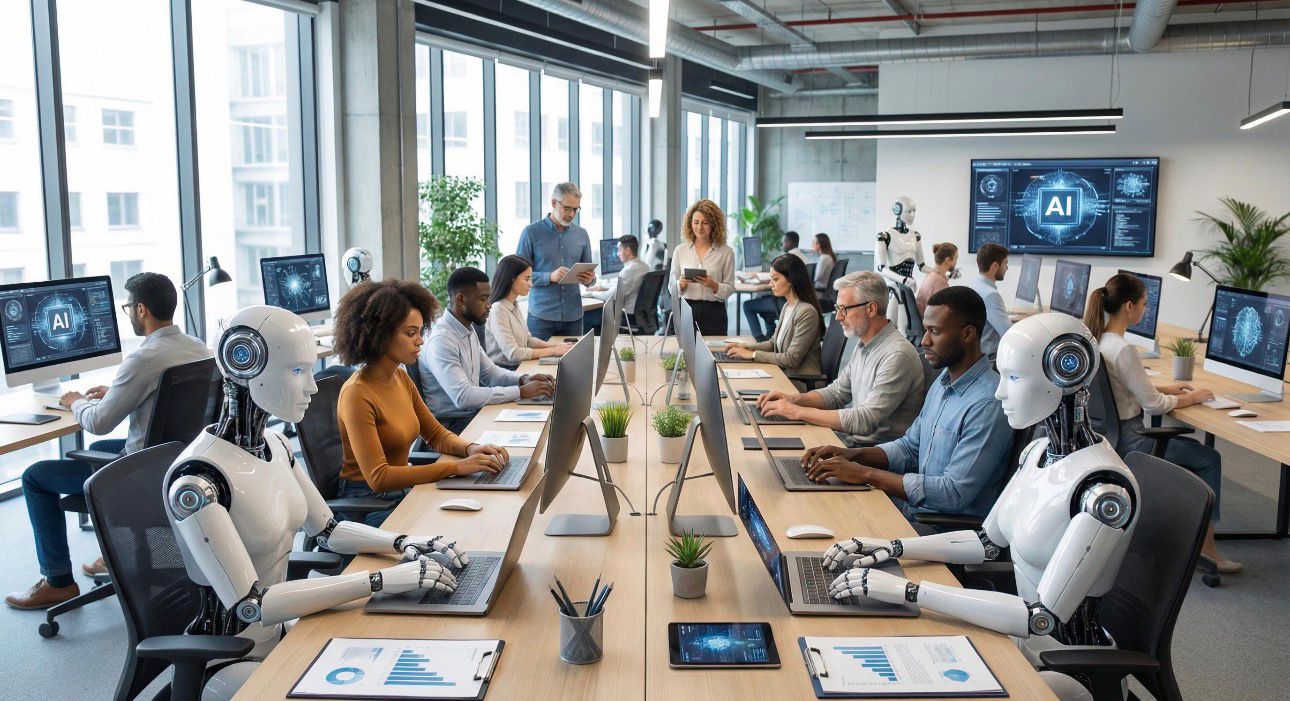
AI creating new jobs is becoming one of the biggest changes in today’s labor market. As artificial intelligence spreads across industries, companies are developing new roles while transforming many traditional positions.
As companies adopt AI-powered tools, a major transformation is taking place in the labor market. Some traditional tasks are becoming automated, while completely new roles are beginning to emerge.
This creates an interesting paradox: the future may offer more opportunities, but not everyone will have the skills needed to take advantage of them.
AI Is Changing What Employers Need
For years, many jobs depended mainly on experience, academic qualifications or knowledge of a specific profession. Today, employers are increasingly looking for people who can work alongside digital technologies.
A marketing professional, for example, may now be expected to understand AI-assisted content creation and data analysis. A customer service worker may interact with AI systems before speaking directly with customers. Even small businesses are using automation to handle tasks that previously required several hours of human work.
This does not necessarily mean that humans are becoming unnecessary.
Instead, the nature of many jobs is changing.
Workers who learn how to use new technologies can potentially become more productive and valuable in their organizations.
New Careers Are Emerging Around AI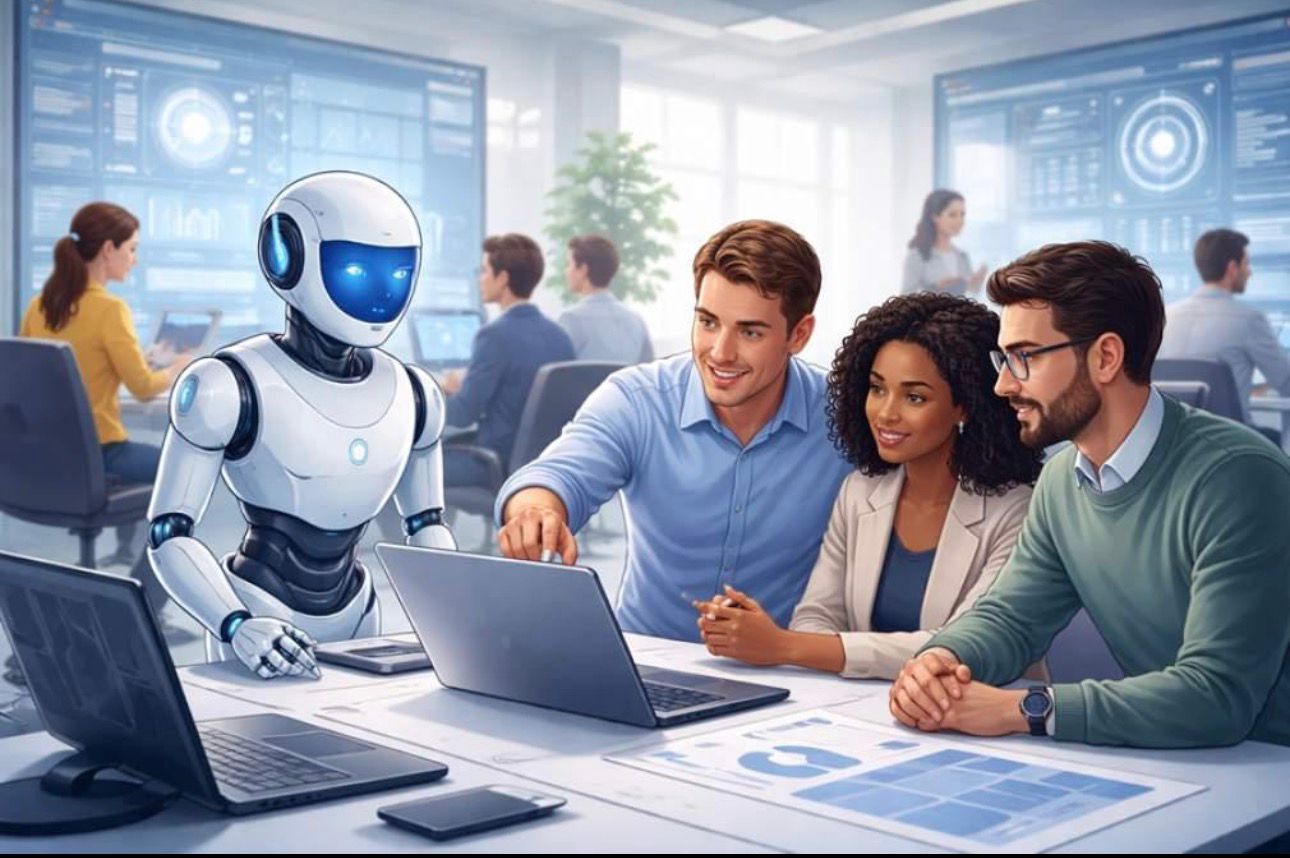
The growth of artificial intelligence is also creating opportunities that were difficult to imagine a few years ago.
Some examples include:
- AI content specialists
- AI trainers
- Automation consultants
- AI product managers
- Data analysts
- Machine learning engineers
- AI integration specialists
- Prompt and workflow designers
- AI cybersecurity professionals
- Digital transformation consultants
Not every new position requires advanced programming knowledge.
Many businesses simply need professionals who understand their industry and can use AI tools effectively to solve practical problems.
That creates an opportunity for workers from different backgrounds.
The Biggest Problem May Be the Skills Gap
The challenge is that technological progress can move faster than education and professional training.
A person who has spent ten or twenty years working in a traditional role may suddenly find that employers are looking for completely different abilities.
The problem is not necessarily a lack of intelligence or experience.
It is often a skills gap.
A worker may have years of professional experience but still struggle to compete for new opportunities because they have not learned how modern digital tools work.
This is particularly important for young people entering the workforce. Having a degree may still be valuable, but practical digital skills can increasingly determine whether someone can adapt to a changing job market.
Learning AI Does Not Mean Becoming a Programmer
One common misconception is that people need to become software engineers to benefit from artificial intelligence.
That is not true.
A journalist can use AI to organize research. A teacher can use it to prepare learning materials. A designer can use AI-assisted creative tools. An entrepreneur can automate repetitive business tasks.
The important skill is understanding how to use technology responsibly and effectively.
For many workers, learning AI may begin with simple tools rather than complicated technical courses.
Companies Also Have a Responsibility
The responsibility for adapting to AI should not fall entirely on workers.
Businesses introducing automation should also invest in training their employees.
Instead of immediately replacing people whenever technology can perform a task, companies can consider whether existing employees can be retrained for higher-value responsibilities.
This approach can benefit both sides.
Workers gain new skills, while businesses retain experienced employees who already understand their products, customers and internal processes.
The Future May Belong to Adaptable Workers
Nobody can predict exactly which jobs will dominate the next decade.
However, one trend is becoming increasingly clear: the ability to learn and adapt is becoming a professional advantage.
A skill that is highly valuable today may become less important tomorrow. At the same time, completely new opportunities can appear unexpectedly.
This means that career development can no longer be viewed as something that ends after school or university.
Continuous learning may become a normal part of professional life.
What Workers Can Do Now
People who are concerned about AI and employment do not necessarily need to panic. They can start preparing.
A practical strategy could include:
- Learn the basics of AI.
Understand what modern AI systems can and cannot do. - Experiment with AI tools.
Use them to improve everyday tasks rather than simply reading about them. - Develop digital skills.
Skills such as data analysis, digital marketing, automation and online communication can be useful across industries. - Strengthen human skills.
Creativity, critical thinking, communication, leadership and problem-solving remain important. - Keep learning.
The ability to acquire new skills may become one of the most valuable career assets.
AI May Not Eliminate Work — But It Can Change Who Gets the Opportunities
The debate about artificial intelligence often focuses on whether machines will take people’s jobs.
A more important question may be:
Who will be prepared for the jobs that emerge after the transformation?
AI can create new industries, improve productivity and generate new types of employment. But those opportunities will not automatically be accessible to everyone.
Workers who adapt early may have an advantage, while those without access to training could find themselves excluded from parts of the new economy.
The future of work, therefore, may not simply be about humans competing against machines.
It may be about humans learning how to work effectively with machines.
And for millions of workers around the world, that ability to adapt could become one of the most important career skills of the next decade.
