


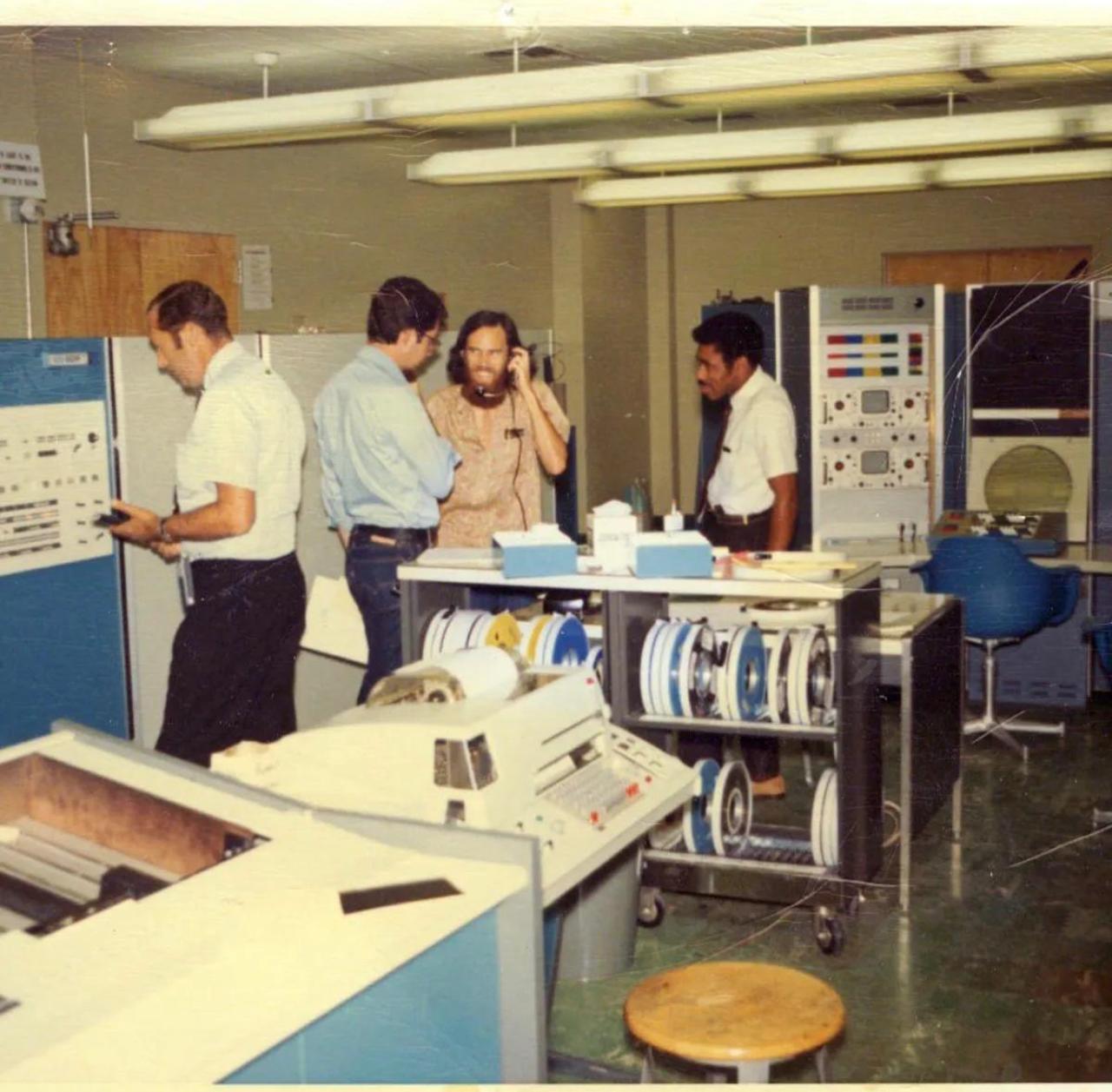
How was the Internet created without the Internet? It sounds like a simple question, but the answer reveals one of the most fascinating stories in the history of technology.
Before Google, Wi-Fi, smartphones, social media, and online tutorials existed, scientists had to solve a remarkable problem: how could computers communicate with each other when there was no global Internet yet?
There was no Google to search for solutions. There was no YouTube to watch tutorials. There were no online forums where engineers could ask questions and receive answers within seconds.
Instead, researchers had to experiment, exchange ideas, write technical papers, build new technologies, and learn from their failures.
The Internet was not created in a single day, nor was it invented by one person. It developed over decades through research into computer networks, packet switching, communication protocols, and information sharing.
Long before people opened a browser to visit a website, computers already existed.
However, most computers worked independently.
A computer could perform calculations, store information, and run programs, but it could not simply communicate with another computer located hundreds or thousands of kilometers away.
Researchers began asking an important question:
What if computers could communicate with each other through a network?
The idea was revolutionary, but making it work was extremely difficult.
One of the important concepts that emerged from early networking research was packet switching.
Instead of sending a complete message as one large block, information could be divided into smaller pieces called packets. These packets could travel through a network and later be reassembled at their destination.
This concept became one of the foundations of modern computer networking.
ARPANET: One of the Major Foundations of the Internet
During the 1960s, researchers working with the U.S. government’s Advanced Research Projects Agency began developing an experimental computer network.
It became known as ARPANET.
In 1969, four computers were connected to ARPANET. Compared with today’s Internet, that number sounds incredibly small.
But at the time, it represented a major technological achievement.
There was no Google.
There was no YouTube.
There was no Facebook.
There was no Wikipedia.
There was not even the modern Web.
Researchers were developing the technology while simultaneously discovering what worked and what did not.
In other words, they were building the road while learning how to travel on it.
But How Did Different Computers Understand Each Other?
Connecting two computers physically was not enough.
Imagine two computers using different systems and communicating through different networks. Even if there is a physical connection between them, they still need common rules to exchange information.
Those rules are called protocols.
One of the most important developments in Internet history was the creation of TCP/IP, a suite of communication protocols that allowed different networks and computers to communicate.
In simple terms, IP helps identify and route packets toward their destination, while TCP helps manage the reliable transmission and organization of data.
This was a major step because researchers were no longer thinking only about connecting computers inside one network.
They were developing a way for different networks to communicate with each other.
That concept is central to what we now call the Internet: essentially, a network of networks.
1983: A Major Turning Point
One important milestone occurred on January 1, 1983, when ARPANET officially transitioned from its previous networking protocol, NCP, to TCP/IP.
This transition became a major milestone in the development of the Internet’s architecture.
But it is important to understand what the Internet looked like at that time.
There were no modern browsers.
There were no social media platforms.
There were no smartphones.
There were no websites filled with videos, advertisements, online stores, and social networks.
The main objective was much simpler:
to allow different computers and networks to communicate using common technical standards.
That foundation would eventually support the enormous global network we use today.
So, Who Invented the Internet?
This question does not have a simple one-person answer.
It is common to hear that someone “invented the Internet,” but the real history is much more complicated.
The Internet was developed through decades of work by many researchers, institutions, universities, engineers, and government organizations.
Among the important figures were Vinton Cerf and Robert Kahn, who played major roles in the development of TCP/IP.
But they were part of a much larger scientific and engineering effort.
The Internet Society describes the development of the Internet as an evolutionary process involving researchers, universities, government projects, and industry.
So rather than thinking of the Internet as the invention of a single person, it is more accurate to see it as the result of many technological discoveries building on one another.
Then Where Does Tim Berners-Lee Come In?
This is where another fascinating chapter begins.
Even after computer networks existed, people still needed a simple way to organize and access information.
That is where the World Wide Web entered the story.
In 1989, British computer scientist Tim Berners-Lee, while working at CERN, proposed a system that would eventually become the World Wide Web.
His idea was connected to a practical problem: scientists needed a better way to share and access information across different computers and institutions.
Berners-Lee developed several technologies that became fundamental to the Web, including HTML, HTTP, and URLs.
By the end of 1990, the first web server and the first web browser had been created at CERN.
And here is an interesting detail:
The first website in the world was created to explain the World Wide Web itself.
The website was hosted at:
The first web server ran on a NeXT computer at CERN.
The Internet and the Web Are Not the Same Thing
This is one of the most common misunderstandings about Internet history.
The Internet is the global network infrastructure that allows computers and other devices to communicate.
The World Wide Web is a system of interconnected documents and resources that operates on top of the Internet.
A simple analogy is a road.
The Internet is like the road infrastructure.
The Web is one of the systems using those roads.
Other services also use the Internet, including email, messaging, file transfers, streaming, and many other applications.
So when you open a website in a browser, you are using the World Wide Web, which operates over the Internet.
But How Did They Build It Without Searching the Internet?
Now we return to the original question.
If the Internet did not exist yet, how did the researchers know what to do?
The answer is surprisingly simple:
They didn’t need the Internet to invent the Internet.
They had books.
They had scientific papers.
They had universities.
They had laboratories.
They had telephones.
They had meetings.
They had mathematical theories.
They had computers.
And most importantly, they had experimentation and collaboration.
Researchers wrote down ideas, tested them, discussed their results, discovered problems, and developed new solutions.
One fascinating example is the RFC — Request for Comments system.
RFC documents became an important way for researchers and engineers to discuss technical ideas, protocols, and standards related to the Internet.
In the early days, these documents could be distributed physically, including on paper, before electronic distribution became widespread.
Think about that for a moment.
Today, a programmer can search for a technical problem and receive thousands of answers within seconds.
Early Internet researchers did not have that luxury.
They had to communicate their ideas through documents, meetings, experiments, and direct collaboration.
The World Wide Web Was Eventually Opened to the Public
Another important moment came in 1993, when CERN made the Web software available on an open basis.
This helped the technology spread beyond its original scientific environment.
As more people and organizations adopted the Web, browsers, websites, servers, and online services began appearing at an increasing rate.
The technology was no longer limited to researchers.
It was becoming a platform for the public.
And eventually, the Web transformed into something far larger than its original creators could have imagined.
From Four Computers to a Connected World
The contrast between the early Internet and today’s digital world is extraordinary.
The early networks connected a small number of computers.
Today, billions of people use Internet-connected devices.
We use the Internet to:
- communicate with family and friends;
- work remotely;
- study online;
- make payments;
- manage businesses;
- watch videos;
- publish articles;
- use artificial intelligence;
- access financial services;
- shop online;
- share photographs and videos;
- collaborate with people around the world.
A technology that began as an experimental communication system eventually became one of the most important infrastructures in modern society.
But it all started with much simpler questions.
Can computers communicate with each other?
Can different networks communicate?
Can information be shared efficiently?
Those questions eventually changed the world.
The Real Lesson Behind the Creation of the Internet
Perhaps the most interesting part of this story is not simply knowing who developed TCP/IP or when ARPANET was created.
The deeper lesson is about how innovation happens.
The people developing early computer networks did not have an online tutorial explaining exactly what they needed to do.
They had problems.
They had theories.
They had experiments.
They made mistakes.
They corrected those mistakes.
They shared their findings.
And then they tried again.
The Internet was therefore not created through the Internet.
It was created through human knowledge, curiosity, experimentation, communication, and collaboration.
And once the technology existed, it made all of those activities dramatically faster.
The Great Irony of Internet History
There is something almost poetic about the entire story.
Today, if you want to learn how to build a website, program an application, configure a server, or understand a technical concept, you can simply search online.
You can watch a video.
Read documentation.
Ask an AI assistant.
Join a forum.
Download software.
Communicate with experts on another continent.
But the people who built the foundations of these possibilities could not do any of that through the Internet.
They had to build the system first.
That is perhaps the most fascinating answer to the question:
How was the Internet created without the Internet?
It was created step by step by people who were willing to solve problems that had never been solved before.
Conclusion
The Internet was not born from a single invention or created by one person.
It emerged from decades of research into computer networking, packet switching, communication protocols, and information sharing.
ARPANET demonstrated that computers could communicate across a network. TCP/IP provided a way for different networks to communicate with each other. Later, Tim Berners-Lee’s World Wide Web made it much easier for people to access and connect information.
Today, billions of people use the Internet without thinking about the enormous amount of research and experimentation that came before it.
And that brings us back to the original question.
How did they create the Internet without having the Internet?
They did it the old-fashioned way: they studied, experimented, collaborated, failed, improved, and tried again.
The Internet we use today to find almost any answer was created by people who had to discover those answers without the Internet itself.
And perhaps that is one of the greatest lessons in the history of technology: sometimes, before you can search for the answer, someone has to build the system that makes searching possible.
