

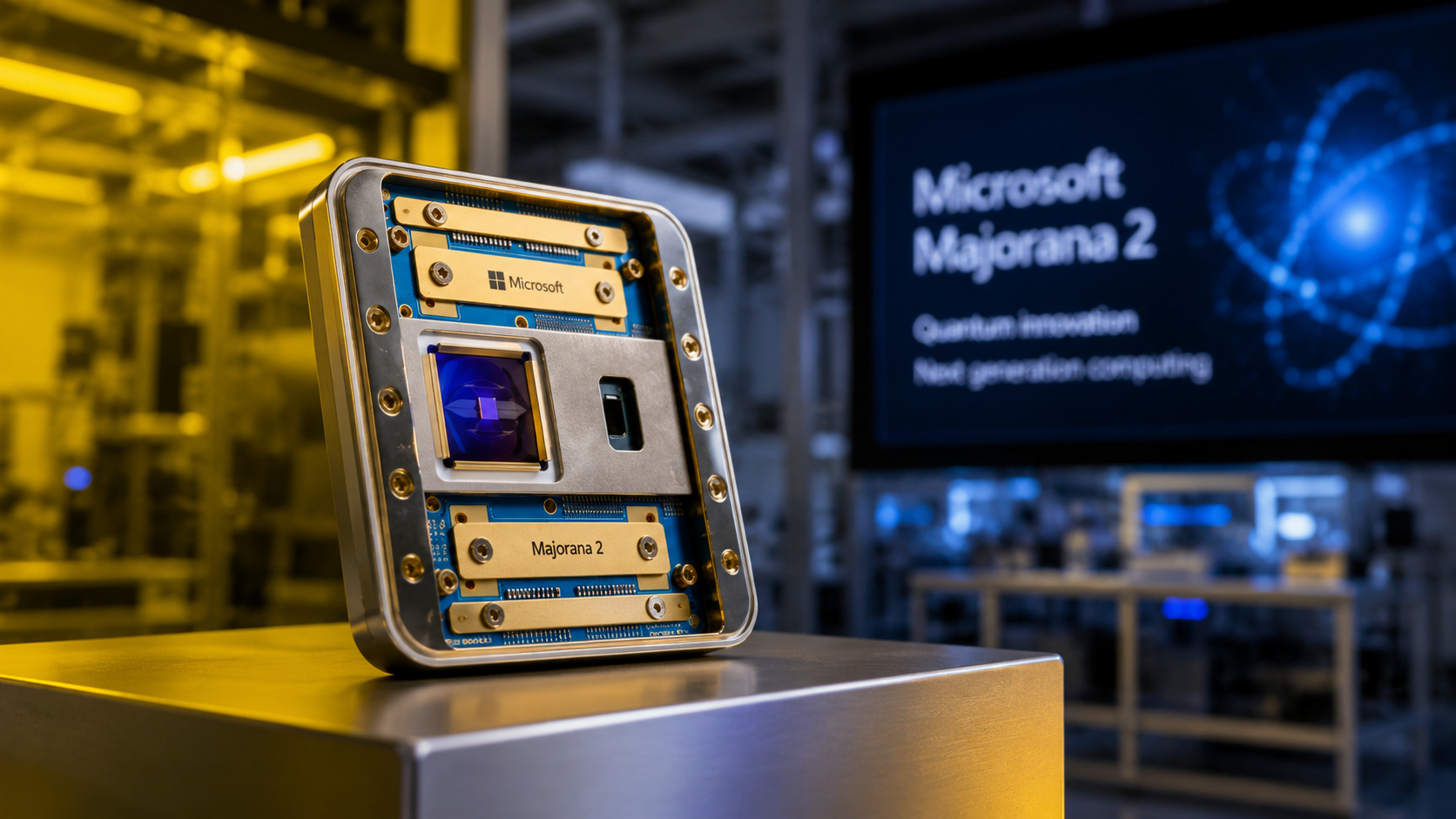
Technology is evolving at an incredible speed, and one of the most exciting breakthroughs of recent years comes from Microsoft. The company has introduced its new Majorana 2 quantum chip, a development that could reshape the future of computing, artificial intelligence, and scientific research.
This innovation belongs to the field of quantum computing, a technology that aims to go far beyond the limits of traditional computers.
In simple terms, Majorana 2 is designed to make quantum systems more stable, reliable, and usable in real-world applications, solving one of the biggest challenges in the industry.
What Is the Majorana 2 Chip?
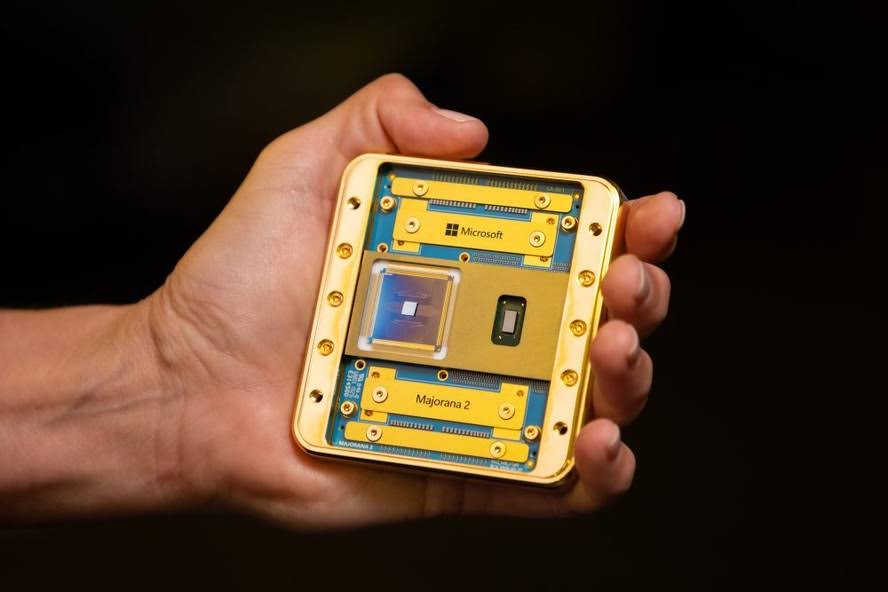
The Majorana 2 chip is a new generation quantum processor built to improve how quantum information is stored and processed.
To understand its importance, we first need to understand how quantum computing works.
Traditional computers use bits, which represent either a 0 or a 1. Everything you do on your phone, laptop, or internet is based on these simple binary values.
Quantum computers, however, use qubits, which are much more powerful because they can exist in multiple states at the same time. This allows quantum machines to process massive amounts of information simultaneously.
But there is a problem:
Qubits are extremely fragile and can lose information easily due to environmental interference, a problem known as decoherence.
The Majorana 2 chip was designed specifically to reduce this issue and improve quantum stability.
Why Stability Matters in Quantum Computing
Stability is the biggest challenge in quantum technology today.
If qubits lose their state too quickly, the computer produces errors and becomes unreliable. This makes it difficult to perform long or complex calculations.
The Majorana 2 chip aims to solve this by using advanced physical principles inspired by Majorana fermions, theoretical particles that can help protect quantum information from disturbances.
By increasing stability, the chip brings quantum computing one step closer to practical and large-scale use.
What Makes Majorana 2 Different?
The Majorana 2 chip stands out for several important reasons:
1. Improved Qubit Stability
The biggest achievement of this chip is reducing error rates. Stable qubits mean more accurate and longer quantum calculations.
2. Resistance to Environmental Noise
Quantum systems are extremely sensitive to heat, vibration, and electromagnetic interference. Majorana 2 is designed to better resist these disturbances.
3. Scalable Design
One of the goals of quantum computing is scaling up from small experimental systems to large functional machines. Majorana 2 is a step toward scalable quantum architecture.
4. Better Integration with AI Systems
The chip is also designed to support advanced artificial intelligence workloads, potentially allowing faster training of AI models in the future.
The Connection Between Quantum Computing and AI
Artificial intelligence requires huge computing power to process data, learn patterns, and improve performance.
Quantum computing could dramatically accelerate this process.
With chips like Majorana 2, AI systems could:
- Train models faster
- Solve complex optimization problems
- Improve machine learning accuracy
- Analyze massive datasets in seconds
This combination of quantum computing and AI could lead to breakthroughs in medicine, engineering, climate science, and cybersecurity.
Why the Name “Majorana”?
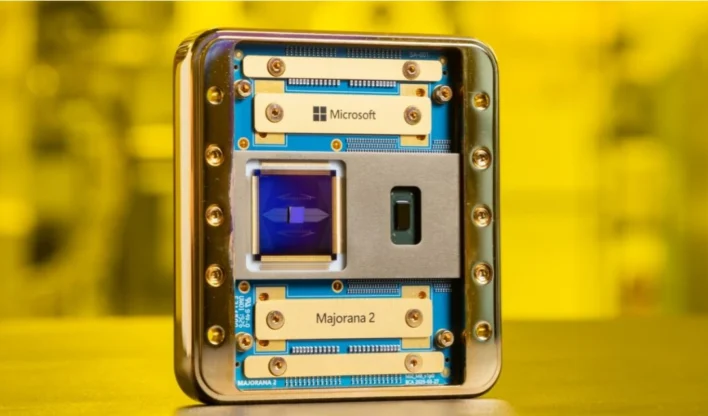
The name comes from Majorana fermions, a theoretical concept in physics.
These particles are special because they can act as their own antiparticles. In quantum computing, this property could be used to create more stable qubits that are less prone to errors.
While Majorana fermions have not been fully confirmed in practical systems, researchers believe they offer one of the most promising paths toward reliable quantum computers.
Real-World Impact of Quantum Computing
Although quantum computing is still in development, its potential applications are massive.
Here are some areas that could be transformed:
Medicine and Drug Discovery
Quantum computers could simulate molecules at atomic levels, helping scientists develop new drugs faster and more accurately.
Cybersecurity
Quantum technology could both break and create encryption systems, leading to a new era of digital security.
Climate and Weather Prediction
More powerful simulations could improve climate models and disaster prediction systems.
Logistics and Transportation
Quantum optimization could make global supply chains faster and more efficient.
Artificial Intelligence
AI systems could become significantly more powerful and efficient when combined with quantum processing.
Challenges Still Ahead
Despite its promise, quantum computing still faces major challenges:
- Extremely high development costs
- Complex engineering requirements
- Need for ultra-cold operating environments
- Limited real-world applications today
Even the Majorana 2 chip, while advanced, is still part of ongoing research and development.
Experts believe it may take years before quantum computers become widely available for commercial use.
The Future of Computing
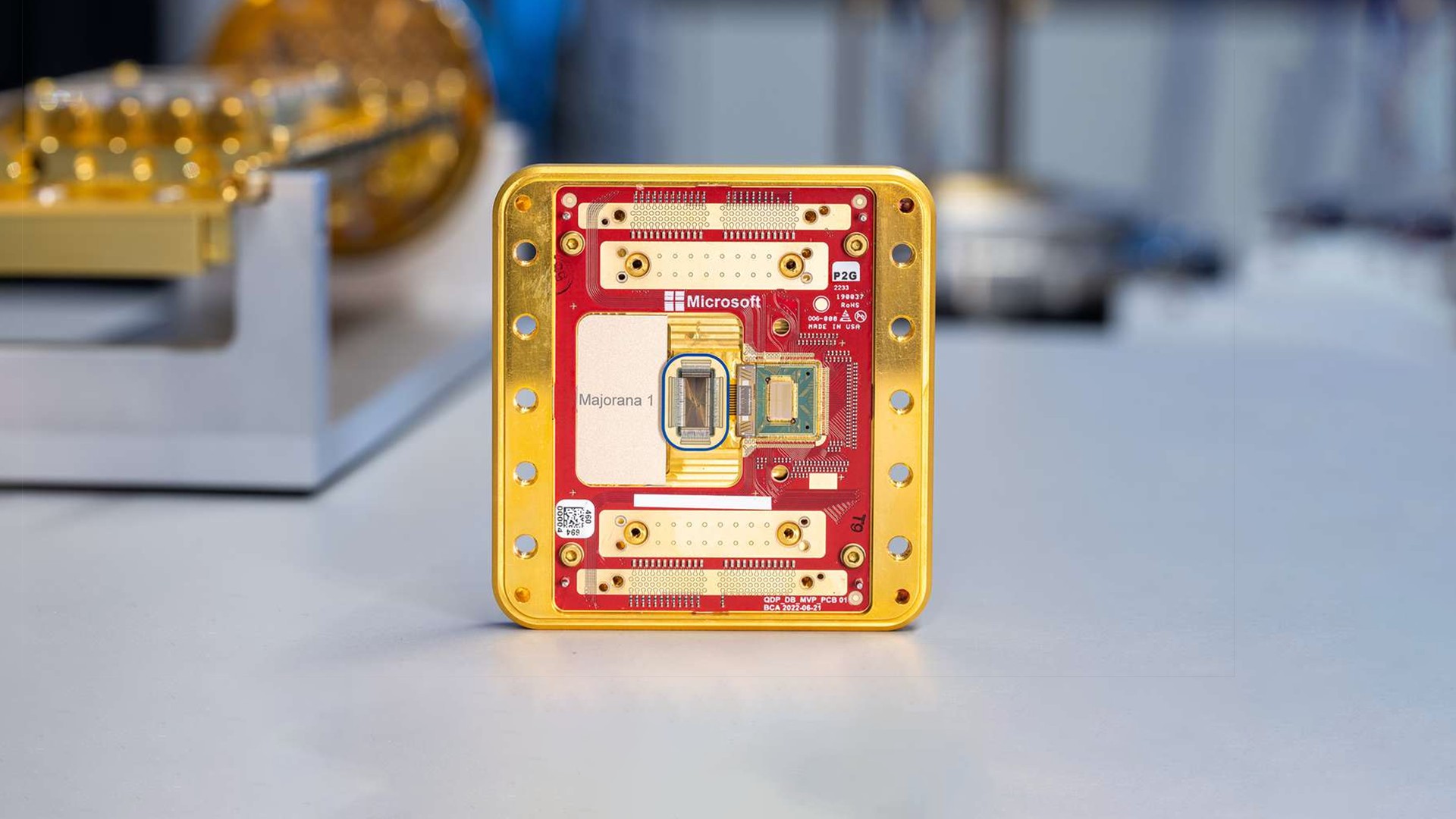
The introduction of Majorana 2 represents an important milestone, not the final destination.
Technology companies around the world are racing to build the first fully stable and scalable quantum computer.
If successful, this could lead to a revolution similar to the rise of the internet or smartphones.
The combination of quantum computing and AI could redefine how humanity solves problems, processes data, and builds technology.
The Majorana 2 quantum chip developed by Microsoft marks a significant step forward in the journey toward practical quantum computing.
With improved stability, reduced errors, and potential integration with artificial intelligence, it represents a major milestone in modern science and technology.
Although still in development, its long-term impact could be enormous, transforming industries and reshaping the digital world.
One thing is clear: the future of computing is no longer just classical—it is becoming quantum.
