

Digital payments are transforming the way people move money around the world. Today, sending cash is no longer about banks, queues, or waiting days for transfers. Instead, systems like PIX and Zelle allow users to transfer money within seconds using only a smartphone.
Although both systems serve a similar purpos fast and easy money transfers they were designed for different countries, financial structures, and user needs. Understanding how they work helps you see how global digital finance is evolving.
What is PIX?
PIX is an instant payment platform created and regulated by the Central Bank of Brazil. Launched in 2020, it quickly became one of the most widely used payment systems in the country.
PIX allows individuals, businesses, and government institutions to send and receive money in real time, 24/7, including weekends and holidays.
Key features of PIX
- Instant transfers (usually seconds)
- Available 24 hours a day, every day
- Works between different banks and fintech apps
- Uses “PIX keys” such as:
- Phone number
- Email address
- National ID (CPF)
- Random key code
PIX is widely used for everyday payments such as shopping, rent, bills, and peer-to-peer transfers. In many cases, it is free for individuals, making it highly attractive compared to traditional bank transfers.
What is Zelle?
Zelle is a digital payment network widely used in the United States. Unlike PIX, Zelle is not operated by a central bank. Instead, it was developed by a group of major American banks and integrated directly into their banking apps.
Zelle allows users to send money directly from one bank account to another using only an email address or phone number.
Key features of Zelle
- Fast transfers, often within minutes
- Integrated into many US banking apps
- No need for separate accounts or wallets
- Uses email or phone number for identification
- Designed mainly for domestic US transactions
Zelle is especially popular for splitting bills, paying friends, or sending money to family members.
PIX vs Zelle: Core Differences
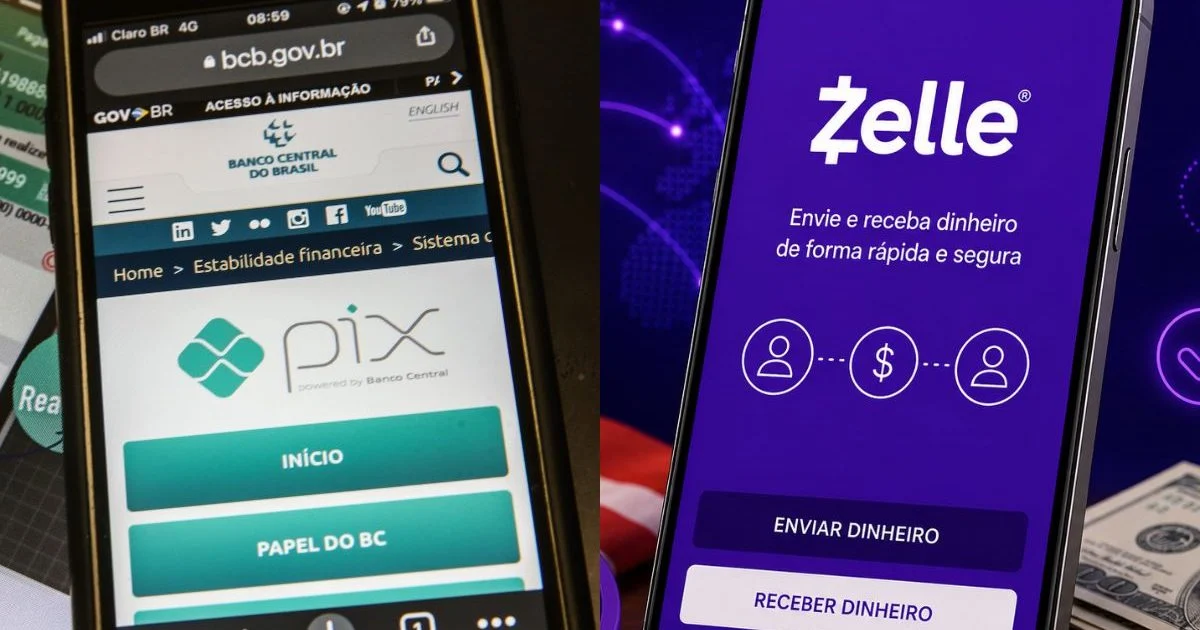
Even though both systems are fast and digital, they are built on different financial models. Here are the most important differences:
1. Country and availability
- PIX: Brazil only
- Zelle: United States only
Each system is deeply integrated into its national banking infrastructure.
2. Governance
- PIX: Controlled by the Central Bank of Brazil
- Zelle: Managed by a private consortium of US banks
This difference affects how each system is regulated and expanded.
3. Speed of transactions
- PIX: Real-time settlement (seconds)
- Zelle: Usually minutes, sometimes longer depending on banks
PIX is generally considered more consistently instant.
4. Operating time
- PIX: 24/7/365 availability
- Zelle: Mostly instant, but depends on participating banks and may have limitations
PIX was designed from the ground up as a fully real-time system.
5. Cost
- PIX: Free for most personal transactions
- Zelle: Typically free, but depends on the bank’s policy
Both systems are low-cost compared to traditional bank transfers or wire services.
6. Identification method
- PIX: Uses multiple “keys” (ID, phone, email, QR code, random key)
- Zelle: Uses email or phone number only
PIX offers more flexibility in how users are identified.
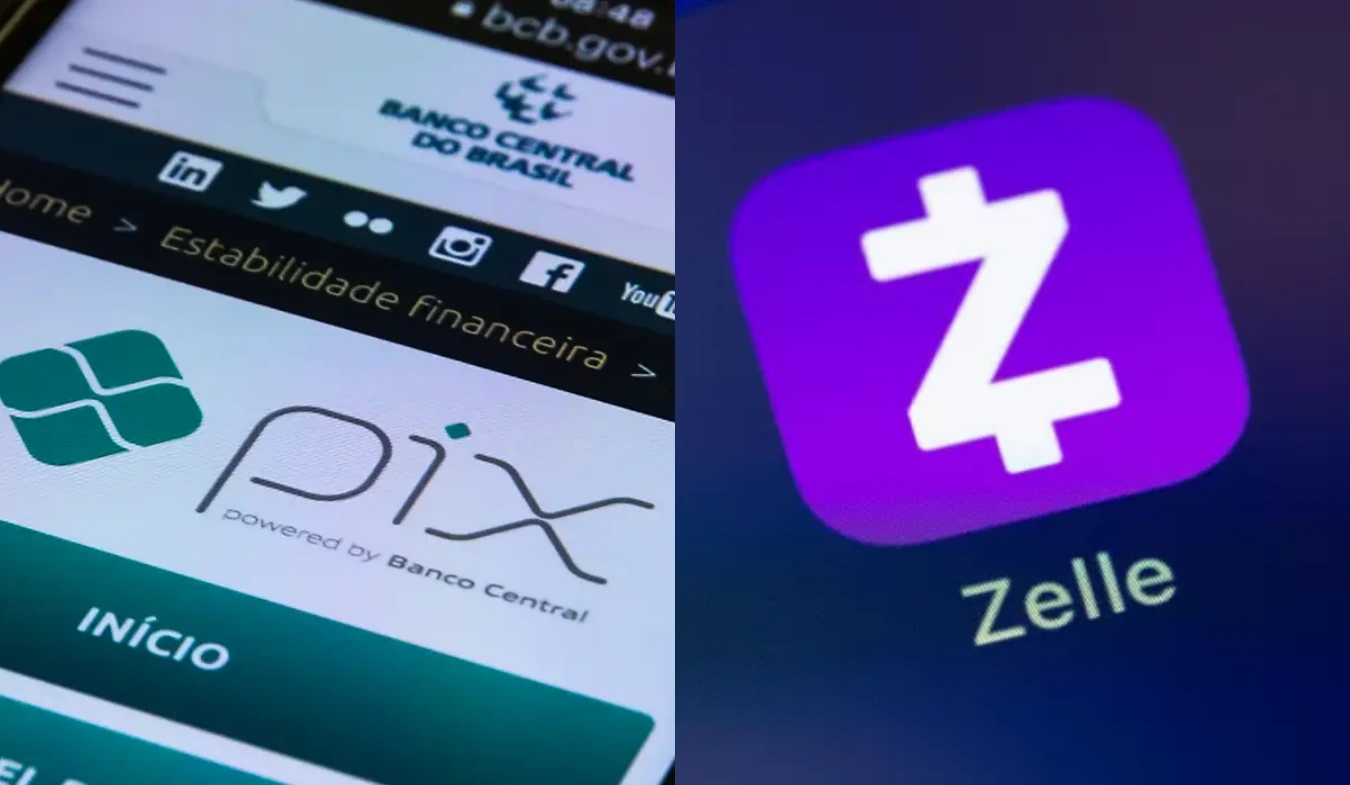
How PIX Works in Practice
Using PIX is simple and user-friendly:
- Open your banking app
- Select PIX transfer
- Choose recipient using their PIX key or QR code
- Enter the amount
- Confirm the transaction
Within seconds, the money is transferred and confirmed.
PIX also supports QR code payments in stores, making it widely used in both online and physical retail environments.
How Zelle Works in Practice
Zelle is also designed for simplicity:
- Open your bank app or Zelle app
- Select “Send Money”
- Enter recipient’s email or phone number
- Type the amount
- Confirm payment
The recipient usually receives the funds directly in their bank account within minutes.
Advantages of PIX
PIX has rapidly changed how Brazilians handle money. Its main advantages include:
- Extremely fast transactions
- No fees for most personal use
- Available at all times
- Works across all major banks
- Supports businesses, government payments, and individuals
- Easy integration with QR code systems
PIX has essentially replaced older systems like bank slips and traditional transfers in Brazil.
Advantages of Zelle
Zelle is also widely appreciated in the US banking ecosystem:
- Fast domestic transfers
- No need for third-party apps in many cases
- Direct bank integration
- Simple user experience
- Widely accepted by major US banks
It is especially useful for personal payments between trusted individuals.
Security: Are They Safe?
Both systems use strong banking-level security, but users must still be careful.
PIX security
- Encryption and bank authentication
- Biometric and password protection in apps
- Strong regulatory oversight by the Central Bank
- Risk mainly comes from scams or user mistakes
Zelle security
- Bank-level security systems
- Transactions are often irreversible
- High reliance on user verification
- Common scam risk similar to PIX
In both systems, security depends heavily on user awareness. Sending money to the wrong person or falling for fraud can lead to irreversible losses.
Common Risks to Be Aware Of
Even with advanced technology, both PIX and Zelle users should be cautious:
- Fake payment requests
- Impersonation scams
- Mistyped recipient information
- Fraudulent sellers
- Social engineering attacks
Since transactions are instant, there is usually no way to cancel a transfer once it is completed.
Which One Is Better?
There is no universal winner between PIX and Zelle because they serve different countries and systems.
However, we can compare their strengths:
- PIX is more advanced in structure, flexibility, and availability
- Zelle is highly effective within the US banking ecosystem
Overall, PIX is often considered more innovative due to its real-time, nationwide infrastructure built by a central bank. Meanwhile, Zelle remains one of the most efficient peer-to-peer payment systems in the United States.
Digital payment systems like PIX and Zelle represent a major shift in global finance. They eliminate barriers, reduce transaction times, and make money transfers more accessible than ever before.
While they operate in different countries, both systems point toward the same future: a world where payments are instant, digital, and available anytime.
As financial technology continues to evolve, systems like PIX and Zelle are likely just the beginning of a much larger transformation in how people manage money globally.
