


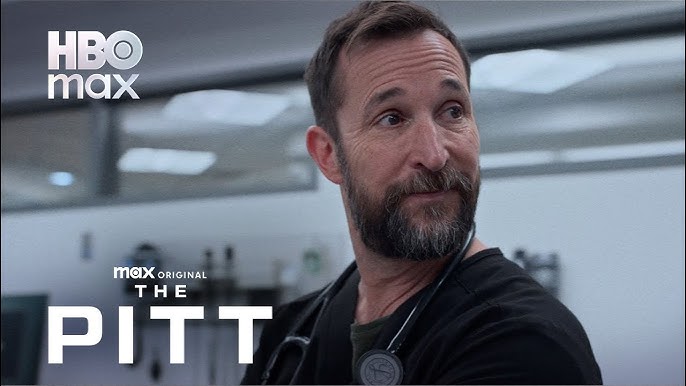
It is widely known that The Pitt has a sharp take on AI in its highly anticipated second season. Premiering in early 2026, the critically acclaimed HBO Max medical drama tackles artificial intelligence head-on. Furthermore, the show does not just focus on futuristic or unrealistic concepts. Instead, it grounds the technology in the harsh, everyday reality of modern American hospitals. Consequently, viewers and medical professionals quickly realize why The Pitt has a sharp take on AI.
In the high-stakes, fast-paced environment of the fictional Pittsburgh Trauma Medical Center, doctors constantly battle severe burnout. Therefore, introducing generative AI seems like a perfect, modern solution to an age-old problem. However, the series masterfully highlights the deep flaws of relying on machines for critical human care. Let us explore exactly how the Emmy-winning show handles this incredibly timely debate.
Exploring Why The Pitt Has a Sharp Take on AI
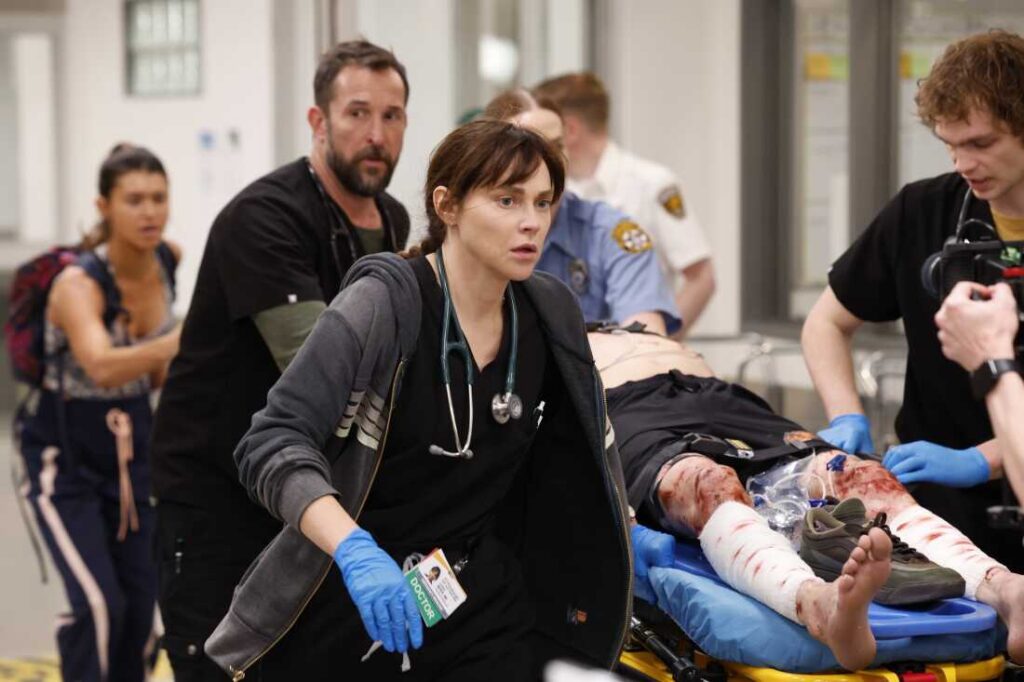
The central conflict in season two revolves around two brilliant but deeply contrasting physicians. On one hand, we have Dr. Michael “Robby” Robinavitch, played masterfully by Noah Wyle. He is a seasoned veteran who relies heavily on his extensive experience and human empathy. On the other hand, we meet Dr. Baran Al-Hashimi, portrayed by Sepideh Moafi. She is an incoming attending physician who advocates strongly for clinical informatics and immediate AI integration.
Many television critics argue that The Pitt has a sharp take on AI precisely because it strictly avoids tired sci-fi cliches. The talented screenwriters do not portray artificial intelligence as a sentient villain. Rather, they present it simply as an “ambient AI scribe” used for mundane medical charting. This subtle nuance makes the narrative incredibly realistic and relatable to modern audiences.
The Generative AI Debate in Season 2
In modern medicine, charting takes up countless hours of a doctor’s demanding day. Thus, Dr. Al-Hashimi introduces a state-of-the-art system designed to cut charting time by a staggering 80%. At first glance, the technology feels like absolute magic. It promises to give physicians their lives back and reduce administrative fatigue.
However, the medical drama immediately introduces narrative friction through several key plot points:
- Initial Excitement: Residents are absolutely thrilled by the prospect of leaving work on time and avoiding “pajama time.”
- The Inevitable Flaw: The software incorrectly substitutes similar-sounding medications in a vulnerable patient’s official chart.
- The Urgent Pushback: Dr. Robinavitch and others passionately argue that a 98% accuracy rate is simply unacceptable in a chaotic trauma center.
The Illusion of Fixing Healthcare Through Technology
One major reason why The Pitt has a sharp take on AI is its profound underlying message about systemic issues. Advanced technology is merely a superficial band-aid. It certainly does not solve the deep root causes of America’s ongoing healthcare crisis.
Specifically, the show argues that artificial intelligence cannot fix critical, foundational problems such as:
- Severe, persistent understaffing in the emergency department.
- Massive systemic underfunding and ruthless corporate budget cuts.
- The immense emotional toll of daily physician burnout.
- The relentless pressure from hospital administration to see more patients without any extra pay.
Ultimately, making doctors more efficient just means that executives will demand more output. Dr. Robby explicitly voices this concern during a tense staff meeting. This highly specific, labor-focused angle proves that The Pitt has a sharp take on AI, as it bravely addresses the grim economic realities of modern medicine.
Key Takeaways: How Artificial Intelligence Impacts the ER
To better understand the series’ unique perspective, we can break down the various pros and cons clearly presented in the show.
As seen in the detailed table above, the hypothetical benefits are quite clear. Nevertheless, the dangerous drawbacks are heavily emphasized throughout the season. Therefore, the popular phrase “The Pitt has a sharp take on AI” perfectly encapsulates the show’s wonderfully balanced yet highly critical viewpoint.
De-skilling: The Dangers of Relying on Medical Algorithms
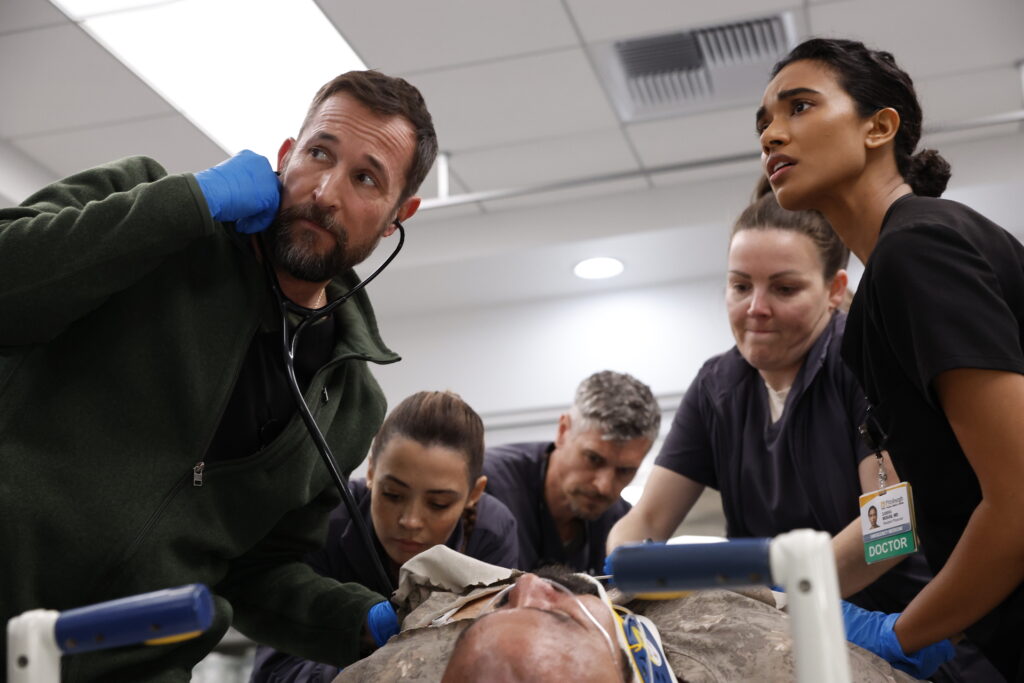
Another endlessly fascinating concept explored in the 2026 season is the looming fear of de-skilling. This dangerous phenomenon happens when skilled professionals rely so much on software that they slowly lose their intrinsic abilities. In the high-stakes world of emergency medicine, this loss of skill can easily become fatal.
For instance, in a deeply gripping mid-season episode, a massive cyberattack hits the hospital’s servers. Suddenly, the entire digital infrastructure goes completely offline. Doctors are immediately forced to go entirely analog. As a result, they must rely solely on their initial training, raw memory, and gut instincts.
During a critical Code Blue, an AI tool is simply too slow to save a dying patient’s life. This thrilling scenario powerfully demonstrates why human expertise remains utterly irreplaceable. It forces the audience to question our growing dependence on digital convenience.
Real-World Context: Does Art Imitate Life in 2026?
The fierce debate over generative AI is not just happening on fictional television screens. In fact, real-life hospitals across the nation are currently grappling with these exact ethical dilemmas. According to recent 2026 surveys by the American Medical Association, roughly two-thirds of physicians now use generative AI to some degree in their daily practices.
However, frontline healthcare workers have voiced massive, organized concerns. Nursing unions and medical boards argue passionately that technology is being rolled out far too quickly. They fear that patient safety is being actively compromised for the sake of corporate efficiency.
Here are some real-world anxieties that are perfectly mirrored in the television show:
- Severe Patient Safety Risks: In real life, AI tools have wrongly recommended discharging critical cancer patients prematurely.
- Unchecked Corporate Greed: AI is sometimes weaponized by hospital executives to cut costs rather than genuinely improve patient care.
- Dangerous Loss of Authority: Doctors deeply fear that predictive algorithms will soon override their professional medical judgment.
What Medical Professionals Are Saying
In widely circulated articles published by major media outlets, real-world physicians have enthusiastically praised the show’s stark accuracy. According to Time Magazine, the overarching storyline perfectly mirrors the intense, ongoing debates happening in actual hospitals regarding AI scribes. Furthermore, Forbes noted that the hit show successfully captures the growing philosophical divide among medical professionals working today.
By firmly grounding its intense drama in well-documented facts, the series significantly elevates its narrative impact. Consequently, it becomes incredibly clear why industry experts universally agree that The Pitt has a sharp take on AI.
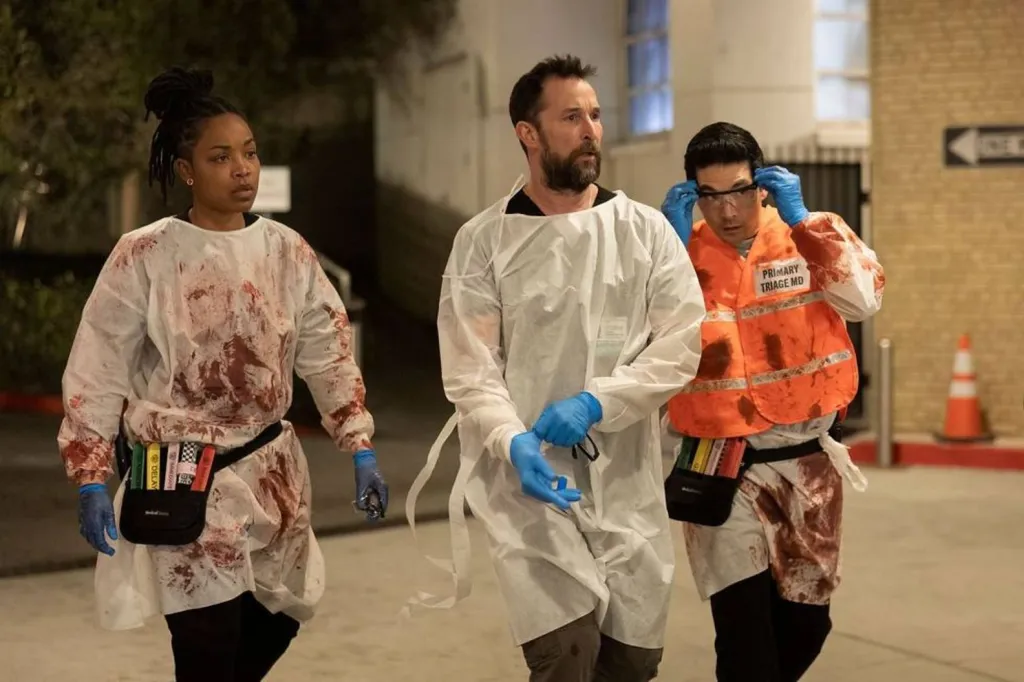
In summary, it is entirely undeniable that The Pitt has a sharp take on AI. By completely avoiding extreme sci-fi tropes, the television series offers a sobering, critical look at modern American healthcare. It firmly acknowledges that while technology can indeed save administrative time, it is by no means a magical cure. Ultimately, AI cannot fix broken corporate systems, severely underfunded departments, or utterly exhausted doctors.
As we continue to integrate predictive algorithms into high-stakes medical environments, the crucial human element must remain supreme. If you have not watched the highly acclaimed latest season yet, now is the absolute perfect time to tune in. Join the global conversation today, and share your personal thoughts on whether artificial intelligence truly belongs in the emergency room!
