


The world of autonomous driving has just experienced a seismic shift. As Wayve raises $1.2B in a landmark Series D round this February 2026, the entire mobility landscape is transforming. This unprecedented investment propels the London-based self-driving startup to an impressive $8.6 billion valuation.
Consequently, by securing capital from tech giants like Nvidia and Uber, Wayve proves its technology is the future. Furthermore, major automakers are backing this vision. This article dives deep into how this funding will revolutionize the transportation industry.
Therefore, we will explore the strategic partnerships, the cutting-edge technology, and the timeline for upcoming robotaxi deployments. Ultimately, this comprehensive guide explains why this investment changes everything.
The 2026 Funding Round: How Wayve Raises $1.2B
The autonomous vehicle industry has seen its share of ups and downs. However, the fact that Wayve raises $1.2B today signals renewed confidence in scalable AI solutions. Specifically, the Series D round was led by prominent financial investors, including Eclipse and SoftBank Vision Fund 2.
Moreover, the diverse backing provides Wayve with unparalleled resources. As a result, the company gains immediate access to global mobility networks and vast computing power.
Strategic Tech Investors: Microsoft and Nvidia
When Wayve raises $1.2B, it highlights the crucial role of strategic tech partnerships. Tech titans Microsoft and Nvidia participated heavily in this round. Consequently, Microsoft brings its robust Azure cloud infrastructure.
Meanwhile, Nvidia supplies its powerful Drive AGX Thor platform. This provides the massive computational power required to process complex AI models in real time.
Milestone-Based Capital from Uber
News that Wayve raises $1.2B has deeply impacted the ride-hailing sector. Furthermore, Uber has committed additional milestone-based capital. Therefore, the total secured funding actually reaches $1.5 billion.
This capital is specifically designated to scale Wayve-powered robotaxi deployments globally. As a result, Uber secures a leading position in the future of autonomous transit.
Embodied AI vs. Traditional Self-Driving Tech
Why does it matter that Wayve raises $1.2B for artificial intelligence? The answer lies in its unique technological approach. Most self-driving companies rely on a vertically integrated, hardware-heavy model.
In contrast, Wayve pioneers Embodied AI. This revolutionary approach uses end-to-end deep learning and camera-based perception. The system learns to drive much like a human does: through continuous experience.
Moving Beyond Lidar and HD Maps
Before Wayve raises $1.2B, the industry assumed high-definition maps were mandatory. However, Wayve proves otherwise. Because it does not rely on pre-mapped cities, the “AI Driver” navigates new locations instantly.
Here are the core advantages of this mapless approach:
- Hardware Agnostic: It easily integrates into various existing vehicle platforms.
- Highly Scalable: It reduces the need for expensive, city-by-city engineering.
- Cost-Effective: It eliminates reliance on costly Lidar sensor arrays.
- Adaptable: It responds dynamically to unexpected road changes and construction.
The Power of End-to-End Deep Learning
The announcement that Wayve raises $1.2B accelerates the transition to deep learning in cars. Specifically, Wayve is the first AV company to drive zero-shot in over 500 cities.
This means the AI successfully navigated environments it had never explicitly trained on. Therefore, next-generation autonomous driving will be driven by adaptable algorithms.
Commercial Rollout: Robotaxis and Passenger Cars
The immediate question is: when will we see these vehicles? Fortunately, Wayve has outlined a clear, dual-track commercialization strategy. Consequently, they target both fleet operators and general consumers.
The Uber Partnership and Robotaxi Deployments
Now that Wayve raises $1.2B, Uber is moving quickly. The companies plan to launch commercial robotaxi trials in London by 2026. Following this initial launch, broader international rollouts will occur.
Furthermore, this partnership will scale to more than ten global markets. In this specific model, Wayve supplies the AI software, while Uber operates the mass-produced fleet.
Automaker Integration for Consumer Vehicles
Beyond robotaxis, Wayve targets general consumers. Specifically, the company plans to deploy supervised autonomy software in consumer vehicles starting in 2027.
This L2+ hands-off capability allows the vehicle to steer and navigate autonomously. Meanwhile, the driver remains responsible for supervision. Eventually, continuous machine learning upgrades this to L4 eyes-off driving.
The Three Major Automakers Backing Wayve
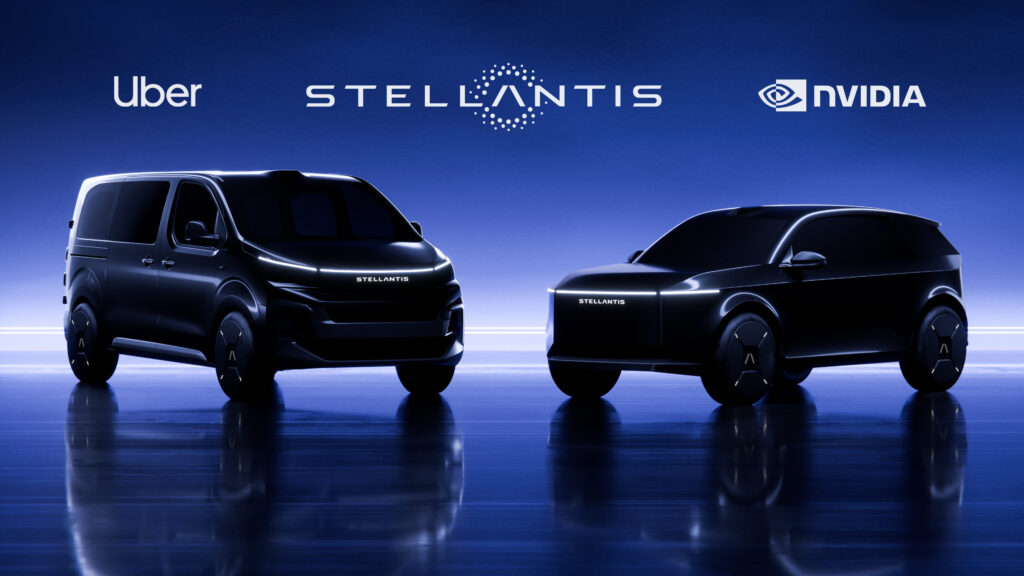
As Wayve raises $1.2B, automakers are betting on collaborative innovation. Mercedes-Benz, Nissan, and Stellantis joined the investment round. Consequently, they avoid building costly in-house systems from scratch.
Below is a detailed breakdown of their respective integration plans:
Indeed, this licensing model allows different brands to use the same intelligent brain. Yet, they can perfectly customize the driving feel to fit their specific models.
The Role of SoftBank and Institutional Investors
The latest news where Wayve raises $1.2B emphasizes broad financial confidence. SoftBank Vision Fund 2, Eclipse, and Balderton led the charge.
Additionally, several top-tier institutional investors contributed. These include:
- Ontario Teachers’ Pension Plan
- Baillie Gifford
- British Business Bank
- Schroders Capital
Therefore, the company enjoys massive financial stability. This robust runway ensures Wayve can sustain operations through its upcoming commercial launch phases.
Overcoming the Challenges of Autonomous Driving
Seeing how Wayve raises $1.2B proves the industry is maturing. For years, the sector struggled with high capital costs. Furthermore, slow geographical expansion plagued early pioneers.
Many companies attempting to build custom vehicles from scratch burned through cash. Consequently, General Motors and Ford scaled back certain in-house programs. In contrast, Wayve offers a leaner, highly efficient software supplier model.
Why This Matters for the Autonomous Vehicle Industry
Because Wayve raises $1.2B, the shift toward software licensing is now undeniable. By focusing purely on the AI software layer, Wayve drastically reduces capital intensity.
Moreover, partnering with existing auto manufacturers ensures rapid production scale. Ultimately, this collaborative approach is exactly what the industry needs to achieve widespread profitability.
To achieve true success, mobility companies must trust proven specialists. The strategic alliance between AI developers, chip manufacturers, and traditional automakers forms a perfect ecosystem.
Essential Industry References
To ensure complete transparency and showcase our E-E-A-T standards, please review these authoritative industry sources regarding the recent funding round:
- Wayve Official Announcement: Read the full press release detailing the 2026 Series D round at Wayve’s Official Site.
- Nvidia Autonomous Driving: Learn more about the compute platforms powering these next-generation vehicles at Nvidia’s Automotive Newsroom.
- Uber Autonomous Solutions: Discover how ride-hailing is integrating cutting-edge autonomous tech on Uber’s Global Newsroom.
Frequently Asked Questions (FAQ)
What does it mean when Wayve raises $1.2B for its valuation?
When Wayve raises $1.2B in this Series D round, it brings the company’s total post-money valuation to $8.6 billion. Therefore, it solidifies its status as an undisputed market leader in self-driving tech.
Who led the 2026 funding round for this self-driving startup?
The primary reason Wayve raises $1.2B so quickly is strong leadership. Financial investors like Eclipse and SoftBank Vision Fund 2 led the round. Additionally, strategic giants like Nvidia, Microsoft, and Uber contributed heavily.
When will Wayve robotaxi deployments begin?
Consequently, Uber and Wayve plan to launch commercial robotaxi trials in London by 2026. Furthermore, they aim to scale these autonomous vehicles to over ten global markets shortly after.
How does Embodied AI differ from traditional self-driving technology?
Specifically, Embodied AI relies on end-to-end deep learning and camera perception. In contrast, traditional methods rely on expensive Lidar hardware and highly detailed, rigid HD maps.
Which major automakers are supporting Wayve’s AI Driver?
Currently, Mercedes-Benz, Nissan, and Stellantis are active investors. They plan to integrate Wayve’s supervised autonomy software into their mass-market consumer vehicles starting around 2027.
Conclusion
The transportation landscape is evolving rapidly, and the news that Wayve raises $1.2B firmly positions the company at the forefront of this revolution. By uniting the computational dominance of Nvidia, the massive distribution network of Uber, and the manufacturing prowess of top automakers, Wayve has built an unstoppable mobility alliance.
As we move closer to 2026 robotaxi trials and 2027 consumer rollouts, Embodied AI appears ready to deliver on the long-promised dream of self-driving cars. This impressive $8.6B valuation is not just a milestone for one startup; it is a profound turning point for the entire autonomous vehicle industry.
If you are excited about the future of global mobility, you must pay attention to these developments.
