


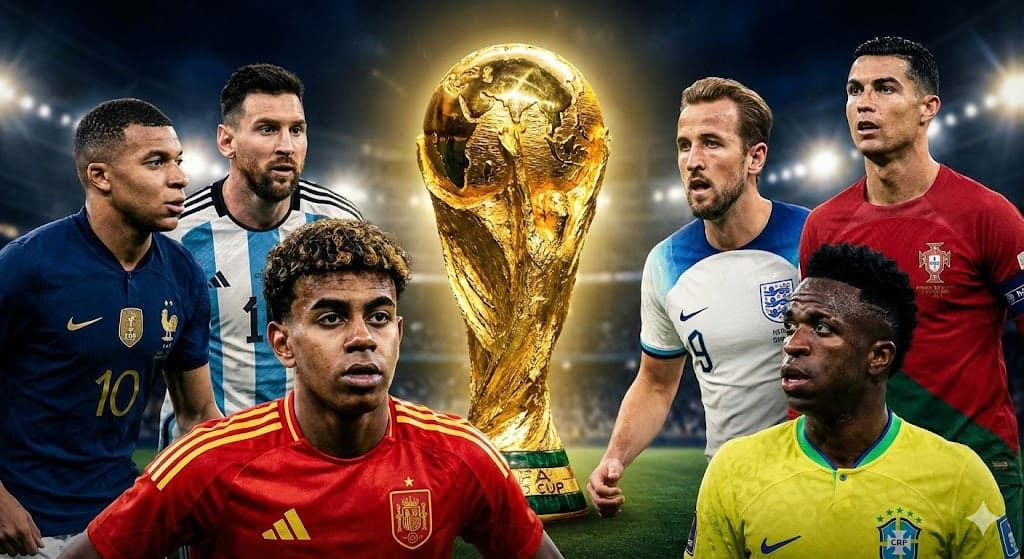
Every four years, the same question takes over football fans around the world: who will win the World Cup? In 2026, the excitement is even bigger because the tournament will feature a new format, more teams, and more surprises than ever before.
To try to answer this question, supercomputers and artificial intelligence models are already running millions of simulations. The results highlight clear favorites — but also leave room for shocking outcomes.
The 2026 World Cup will be historic
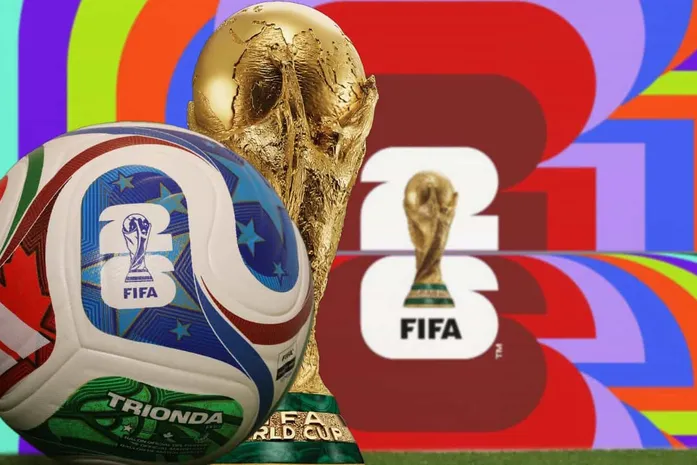
The FIFA World Cup 2026 will be hosted by three countries: the United States, Canada, and Mexico. It will also be the first edition with 48 national teams competing.
This new format changes everything. There will be more matches, more chances for underdogs, and more pressure on top teams. Traditional powerhouses will have to be even more careful to avoid early exits.
How does a supercomputer make predictions?
Supercomputers analyze huge amounts of data to simulate possible outcomes. They consider factors such as:
- recent team performance
- player quality and form
- historical World Cup results
- tactical systems
- goals scored and conceded
- injuries and squad depth
After millions of simulations, patterns begin to show which teams are most likely to win the tournament.
Top favorites for the title
France
France is consistently ranked among the strongest teams in the world. With a deep squad full of young talent and experienced stars, they remain one of the most balanced teams in international football.
Even when they do not play at their best, they often find a way to win.
Brazil
Brazil remains one of the most feared teams in world football. Known for its talent, creativity, and attacking style, the team always enters the tournament as a strong contender.
However, consistency in big knockout matches remains their biggest challenge.
Argentina
The current world champion, Argentina, arrives in 2026 with high confidence. Even as some veteran players approach the end of their careers, the team still has a strong core and winning mentality.
Their teamwork and mental strength are major advantages in high-pressure games.
England
England has one of the most talented generations in recent history. With fast, young, and skilled players, they are always dangerous.
The main issue for England has been handling pressure in crucial knockout stages.
Spain and 🇩🇪 Germany
Both Spain and Germany are also strong contenders:
- Spain focuses on possession-based football and technical skill
- Germany relies on discipline, structure, and efficiency
Both teams have the potential to go far depending on their tournament path.
What influences supercomputer predictions?
Even advanced AI cannot predict football with 100% accuracy. Many unpredictable factors influence results, such as:
Player form
A single player in top form can change the outcome of matches.
actical decisions
Coaching strategies often decide tight games.
Mental pressure
World Cup knockout games are extremely intense.
Injuries
Losing key players can drastically weaken a team.
Possible surprises in 2026
With 48 teams in the tournament, surprises are very likely:
- stronger performances from African teams
- growth of North American national teams
- early elimination of traditional giants
- emergence of new young stars
This makes the competition even more unpredictable and exciting.
Can we trust these predictions?
Supercomputers are powerful, but they are not perfect. They rely on data and probabilities, not emotions or real-life unpredictability.
Football is full of surprises — a last-minute goal, a penalty miss, or a red card can completely change history.
So, who will win the 2026 World Cup?
Based on current simulations, the main favorites are:
- France
- Brazil
- Argentina
- England
- Spain or Germany
But in football, nothing is guaranteed until the final whistle.
Final thoughts
The 2026 World Cup is shaping up to be one of the most exciting tournaments ever. With more teams, new formats, and advanced technology analyzing every detail, expectations are extremely high.
Still, one truth remains unchanged: football is unpredictable, and that is what makes it beautiful.
In the end, it is not the supercomputer that lifts the trophy it is the performance on the pitch.
