


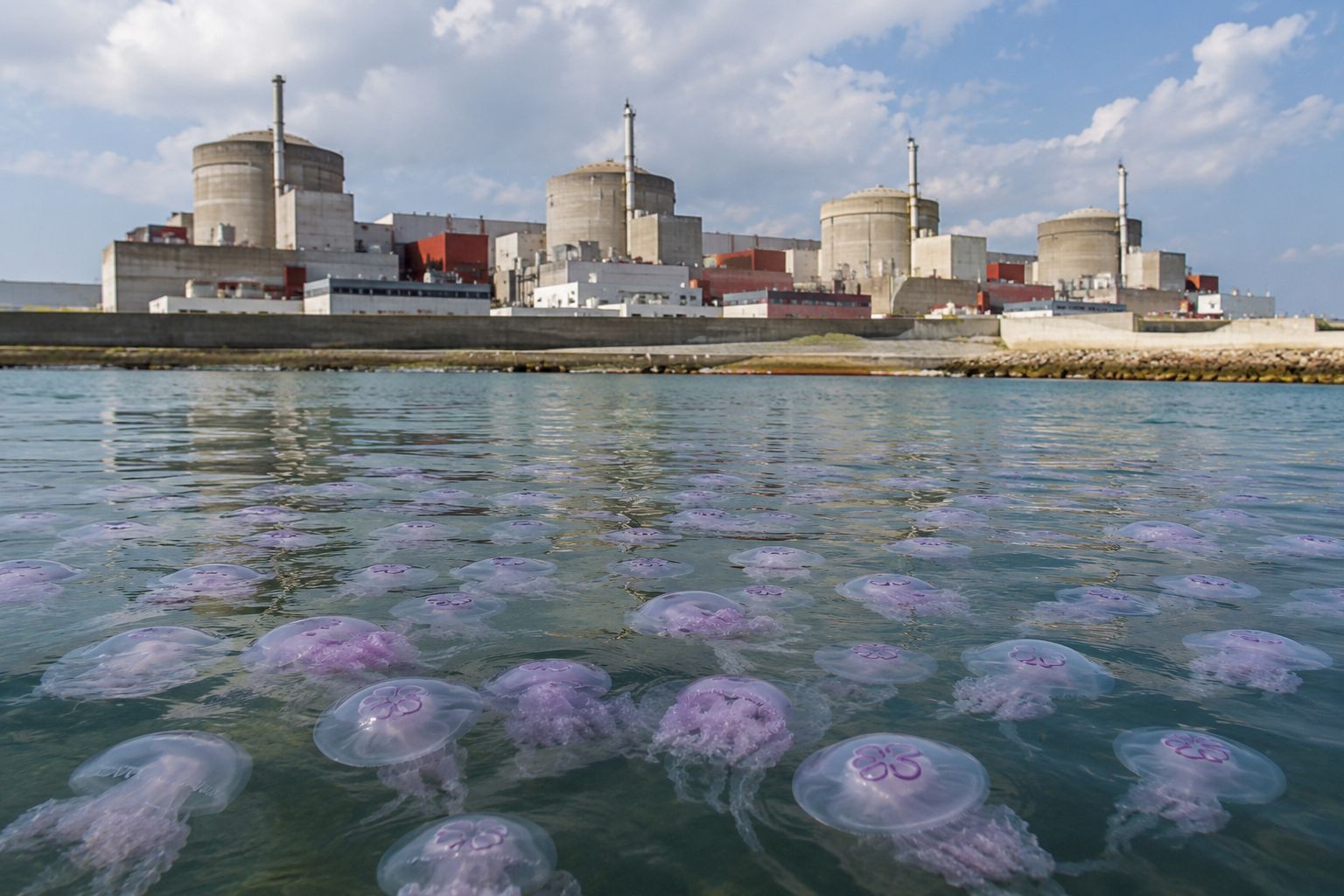
The Gravelines nuclear power plant in France has been affected by a new influx of jellyfish, forcing EDF to temporarily shut down one reactor and reduce the output of another as a precaution.
A new wave of jellyfish has disrupted operations at France’s Gravelines nuclear power plant, prompting operator EDF to take precautionary measures at one of Europe’s largest nuclear facilities.
On August 26, EDF temporarily shut down production unit 3 after a large concentration of jellyfish reached the filtration systems connected to the plant’s seawater pumping station. The power output of unit 2 was also adjusted as a preventive measure.
The latest incident comes only days after the facility experienced a similar disruption earlier in August, highlighting the operational challenges that marine conditions can create for coastal nuclear power stations.
How Jellyfish Can Affect a Nuclear Power Plant
Gravelines uses seawater as part of the cooling system required by its reactors. Before the water reaches the relevant systems, it passes through filtration equipment designed to prevent marine organisms and debris from entering the plant’s infrastructure.
During periods of unusually large jellyfish concentrations, the animals can accumulate around these filtration systems and restrict the flow of seawater.
When the cooling-water intake is affected, the plant can automatically or preventively reduce electricity generation or shut down a reactor.
These measures are intended to maintain safe operating conditions and do not, by themselves, indicate a nuclear emergency.
Gravelines Has Faced Similar Problems Before
The latest event is not an isolated occurrence.
Gravelines experienced a major jellyfish-related disruption in August 2025, when several reactors were affected. EDF subsequently reviewed the incident and strengthened measures for detecting and responding to large concentrations of marine organisms.
The plant has since increased monitoring and detection capabilities around its seawater intake systems.
Despite these preparations, another significant influx occurred in August 2026.
What Happened Earlier This Month?
The plant experienced another major jellyfish incident on August 10.
Reactors 3 and 4 automatically shut down after large numbers of jellyfish reached the seawater filtration systems. EDF also stopped reactor 2 as a precaution and reduced the output of reactor 1.
Reactor 3 was later reconnected to the French electricity grid on August 18. However, the unit was shut down again on August 26 following the latest influx.
The repeated interruptions demonstrate how environmental conditions can temporarily affect electricity production at coastal nuclear facilities.
Why the Incident Matters for France’s Energy System
Gravelines is an important facility for France’s electricity network.
The plant has six reactors, each capable of producing roughly 900 megawatts, giving the site a combined capacity of approximately 5.4 gigawatts when operating at full capacity.
France depends heavily on nuclear power for its electricity generation. As a result, unexpected interruptions at major nuclear facilities can attract significant attention, particularly during periods of high electricity demand.
Nevertheless, the jellyfish-related shutdowns at Gravelines have been treated as operational and precautionary measures rather than a threat to nuclear safety.
A Growing Challenge for Coastal Nuclear Facilities
The events at Gravelines highlight a broader challenge for nuclear facilities located near oceans and other major bodies of water.
Nuclear reactors require dependable cooling systems, meaning environmental changes can sometimes affect their operations.
Extreme temperatures, drought, algae, debris and large concentrations of marine organisms can all create difficulties for cooling-water systems.
Jellyfish blooms are particularly challenging because large numbers of animals can accumulate around water-intake and filtration equipment within a short period.
Scientists have also investigated links between changing ocean conditions and jellyfish populations, although the causes of individual jellyfish blooms can vary considerably.
No Nuclear Safety Emergency Reported
Despite the unusual nature of the incident, the jellyfish influx does not mean that Gravelines has suffered a nuclear accident.
The shutdowns are part of the plant’s protective operating procedures. The purpose is to prevent problems with the cooling-water system and allow operators to respond to changing conditions.
The key issue for EDF is therefore restoring affected units when conditions permit while continuing to monitor the seawater intake systems.
Conclusion
The latest jellyfish influx at France’s Gravelines nuclear power plant shows how natural environmental events can temporarily disrupt highly engineered energy infrastructure.
EDF’s decision to shut down reactor 3 and reduce the output of reactor 2 was a precautionary response to the presence of large numbers of jellyfish around the plant’s seawater filtration system.
For now, the event represents an operational disruption rather than a nuclear safety emergency. However, the recurrence of similar incidents highlights the importance of preparing coastal nuclear facilities for changing marine and environmental conditions.
