


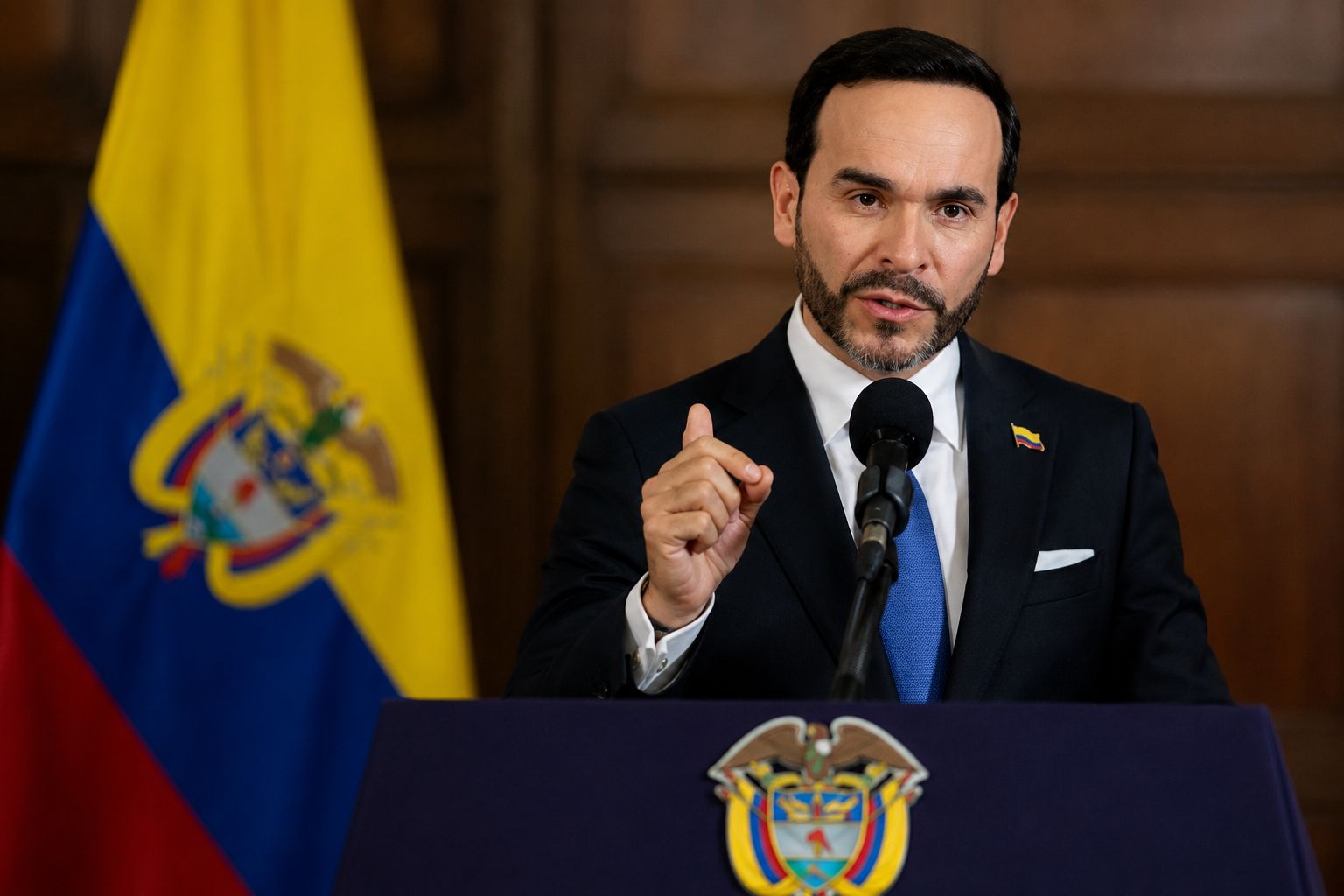
Colombia extradition to the United States has moved forward after the country’s new government authorized the transfer of five armed-group leaders wanted by US authorities. The decision marks a significant change in Colombia’s approach to individuals accused of serious crimes and linked to armed organizations.
Colombia’s new government has taken a significant step in its security strategy by ordering the extradition to the United States of five members of armed and criminal organizations.
President Abelardo de la Espriella announced the decision on Wednesday, August 26, saying the extraditions had previously been approved but were suspended while the individuals participated in peace negotiations and dialogue processes under the former government of Gustavo Petro.
The decision represents a clear shift in how the new administration intends to deal with armed organizations accused of serious crimes.
Five Individuals Targeted
The extradition orders involve Geovany Andrés Rojas, known as “Araña”; Willington Henao Gutiérrez, known as “Mocho Olmedo”; Carmen Evelio Castillo Carrillo, known as “Muñeca”; Gabriel Yepes Mejía, known as “HH”; and Fredy Castillo Carrillo, known as “Pinocho.”
Three of them are currently in Colombian custody, while the other two remain fugitives, according to Colombian authorities.
The cases involve individuals linked to dissident factions of the former FARC, the ELN and the Autodefensas Conquistadoras de la Sierra Nevada.
Extraditions Were Previously Suspended
The Colombian government said the extradition requests had already been approved in 2025. However, their transfer to the United States was suspended because some of those involved were participating in different dialogue and peace processes with the previous administration.
After reviewing the cases, the new government concluded that there were not sufficient verifiable results demonstrating that their participation in the negotiations had produced concrete contributions toward peace.
The decision therefore removes the protection that had temporarily delayed the extradition process.
Drug Trafficking Among the Alleged Charges
The United States is seeking several of the individuals in connection with allegations including drug trafficking, organized crime, money laundering, weapons offenses and narcoterrorism, depending on the individual case.
For the Colombian government, the move is part of a broader effort to strengthen cooperation with the United States in the fight against organized crime and drug trafficking.
A New Direction for Colombia’s Security Policy
The extradition decision also highlights a major political difference between the new administration and the previous government.
Gustavo Petro’s administration pursued the so-called “Total Peace” strategy, which sought negotiations with several armed and criminal organizations. The approach faced growing difficulties as violence and disagreements with some groups continued.
President de la Espriella has instead emphasized security, law enforcement and the authority of the state. His administration has indicated that negotiations should not be used as a way for individuals accused of serious crimes to avoid prosecution.
What Happens Next?
For the three individuals already in Colombian custody, authorities are expected to proceed with the extradition process to the United States. The two fugitives, meanwhile, must first be captured before their extradition orders can be implemented.
The development is likely to remain closely watched in both Colombia and Washington, particularly because it signals a stronger alignment between Bogotá’s new security agenda and international efforts against drug trafficking and transnational organized crime.
For Colombia, the decision goes beyond five individual cases. It represents an early and highly visible indication that the new government intends to replace dialogue-centered approaches toward armed organizations with a policy focused more heavily on prosecution, extradition and state security.
The decision could also have wider implications for Colombia’s international security cooperation. By moving forward with the extradition requests, the government is reinforcing its commitment to work with US authorities against transnational criminal networks. The cases may also influence how future negotiations with armed organizations are handled, particularly when serious criminal allegations are involved.
