



Space exploration is entering a new era. As more satellites, space stations, and missions are launched beyond Earth, the need to keep these systems operating efficiently for longer periods continues to grow. To address this challenge, engineers have developed an impressive new technology: Helios, a four-armed robot designed to repair spacecraft and other structures in space.
The project has attracted significant attention due to its ability to perform complex tasks in one of the most challenging environments known to humanity. Beyond reducing costs, the robot could improve mission safety and lessen the need for astronauts to carry out dangerous maintenance operations.
Why Are Space Repairs So Difficult?
Repairing equipment in space is far more complicated than fixing machines on Earth. When a satellite or spacecraft experiences a malfunction, there is no nearby workshop available to perform quick repairs.
In many situations, a technical failure can end the operational life of equipment worth millions or even billions of dollars. Sending astronauts to perform repairs is also expensive and requires extensive planning, specialized training, and significant resources.
The harsh conditions of space create additional challenges. Extreme temperatures, radiation exposure, and microgravity make even simple maintenance tasks difficult.
This is where Helios could play a major role in the future of space operations.
Meet Helios
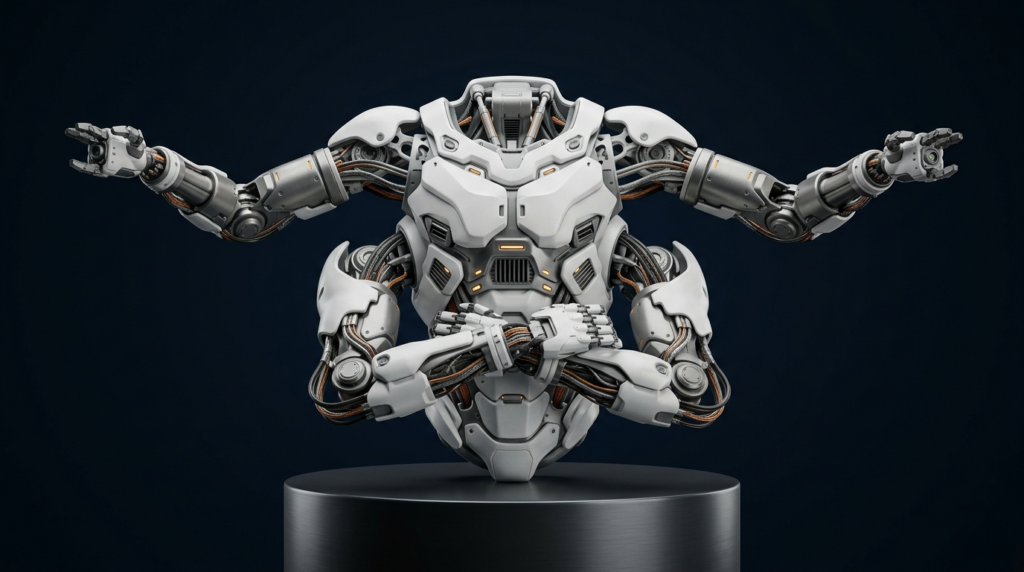
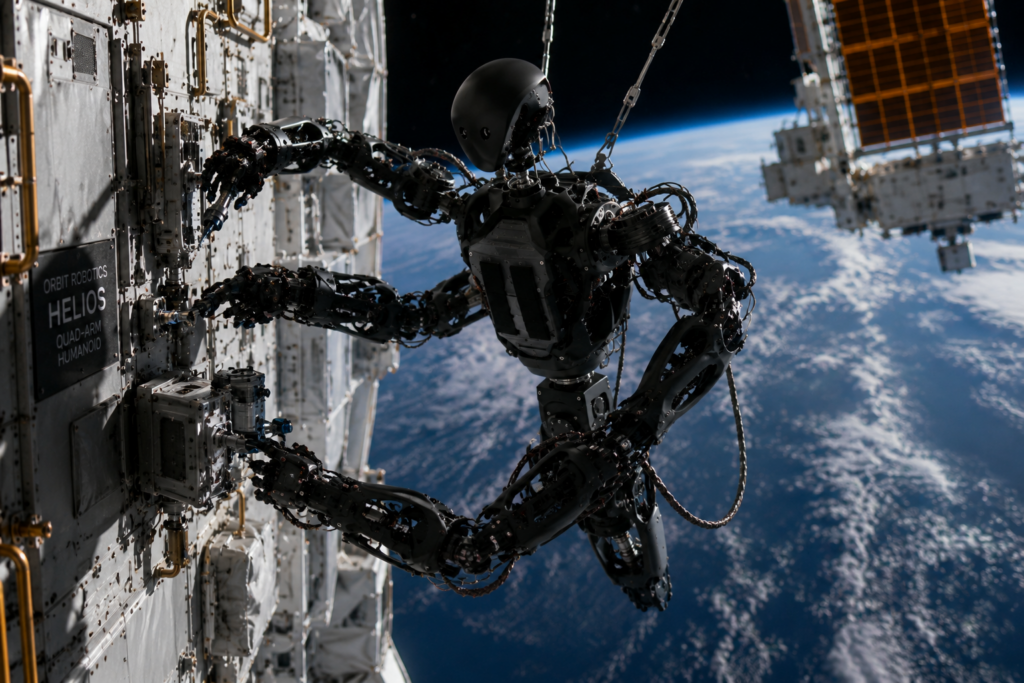
Helios is an advanced robotic system designed to work in orbit and perform tasks that would normally require human intervention. Its most distinctive feature is its four robotic arms, which allow it to handle multiple operations simultaneously.
Traditional space robots often use one or two arms, but Helios was developed to provide greater flexibility and efficiency during repair missions.
With four arms, the robot can hold components steady while using other arms to manipulate tools, install parts, or carry out delicate adjustments.
This unique design makes repairs faster, more stable, and more precise.
How the Four Arms Work
Each arm is equipped with multiple joints that mimic the movement of a human arm. This allows Helios to reach different angles and work in confined spaces.
The arms can function together as a coordinated system. For example:
- Two arms can stabilize a structure.
- A third arm can remove a damaged component.
- The fourth arm can install a replacement part.
This multitasking capability is one of the robot’s most remarkable features.
Advanced sensors help the system detect objects, measure distances, and perform highly accurate movements.
Artificial Intelligence at the Core
Another major advantage of Helios is its integration of artificial intelligence.
The robot can analyze its surroundings, identify obstacles, and assist in making operational decisions during maintenance procedures.
Artificial intelligence also helps with component recognition, tool selection, and the execution of complex repair sequences.
Although human operators on Earth still supervise its activities, the robot’s autonomous capabilities significantly reduce the time required for many operations.
Benefits for Space Missions
The introduction of specialized robots like Helios could bring several benefits to the space industry.
Improved Safety
Spacewalks are among the most dangerous activities astronauts perform. By assigning maintenance tasks to robotic systems, mission risks can be significantly reduced.
Lower Costs
Crewed missions require enormous financial investments. If robots can perform maintenance and repair tasks, many operations can be completed at a lower cost.
Longer Equipment Lifespan
Instead of replacing expensive satellites and space hardware, organizations may be able to repair and upgrade them, extending their operational life.
Greater Mission Efficiency
Rapid repairs can prevent interruptions to critical services such as communications, navigation systems, and Earth observation programs.
The Future of Space Maintenance
Experts believe robotic maintenance systems will become increasingly common in the coming decades.
With thousands of satellites currently orbiting Earth and ambitious plans involving the Moon and Mars, the demand for in-space servicing is expected to grow rapidly.
Technologies like Helios could eventually perform a wide range of functions, including:
- Structural inspections;
- Replacement of damaged components;
- Installation of new equipment;
- Satellite refueling;
- Assembly of large structures in orbit.
These capabilities could fundamentally change how future space missions are designed and managed.
A New Generation of Space Robotics
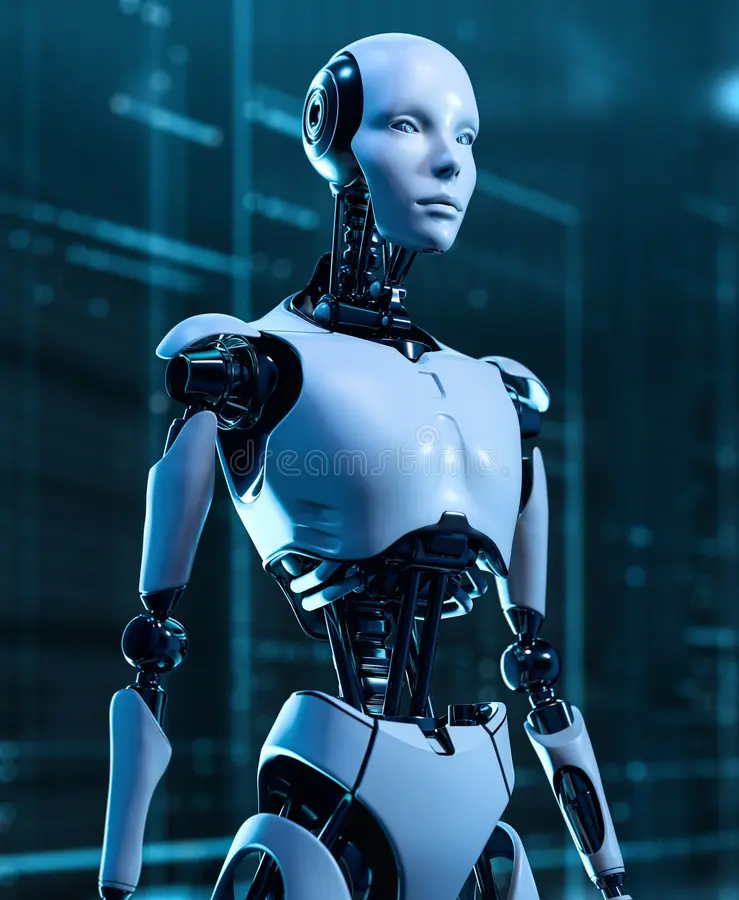
Helios represents an important step forward in the evolution of space robotics. Its four-arm design demonstrates how engineers are creating innovative solutions to challenges that once seemed impossible to overcome.
As space exploration expands, intelligent and autonomous machines will become essential tools for supporting human activities beyond Earth.
The development of Helios highlights the growing role that robotics will play in maintaining spacecraft, satellites, and future space infrastructure.
Conclusion
Helios is more than just a robot. It represents a new chapter in space exploration, where artificial intelligence, automation, and advanced engineering work together to expand humanity’s capabilities in space.
With its four robotic arms and ability to perform complex repairs, the system has the potential to reduce costs, improve safety, and extend the lifespan of valuable equipment operating in orbit.
If future testing and development continue to deliver promising results, Helios could become a key technology for the next generation of space missions, helping keep spacecraft, satellites, and orbital structures functioning far longer than ever before.
