


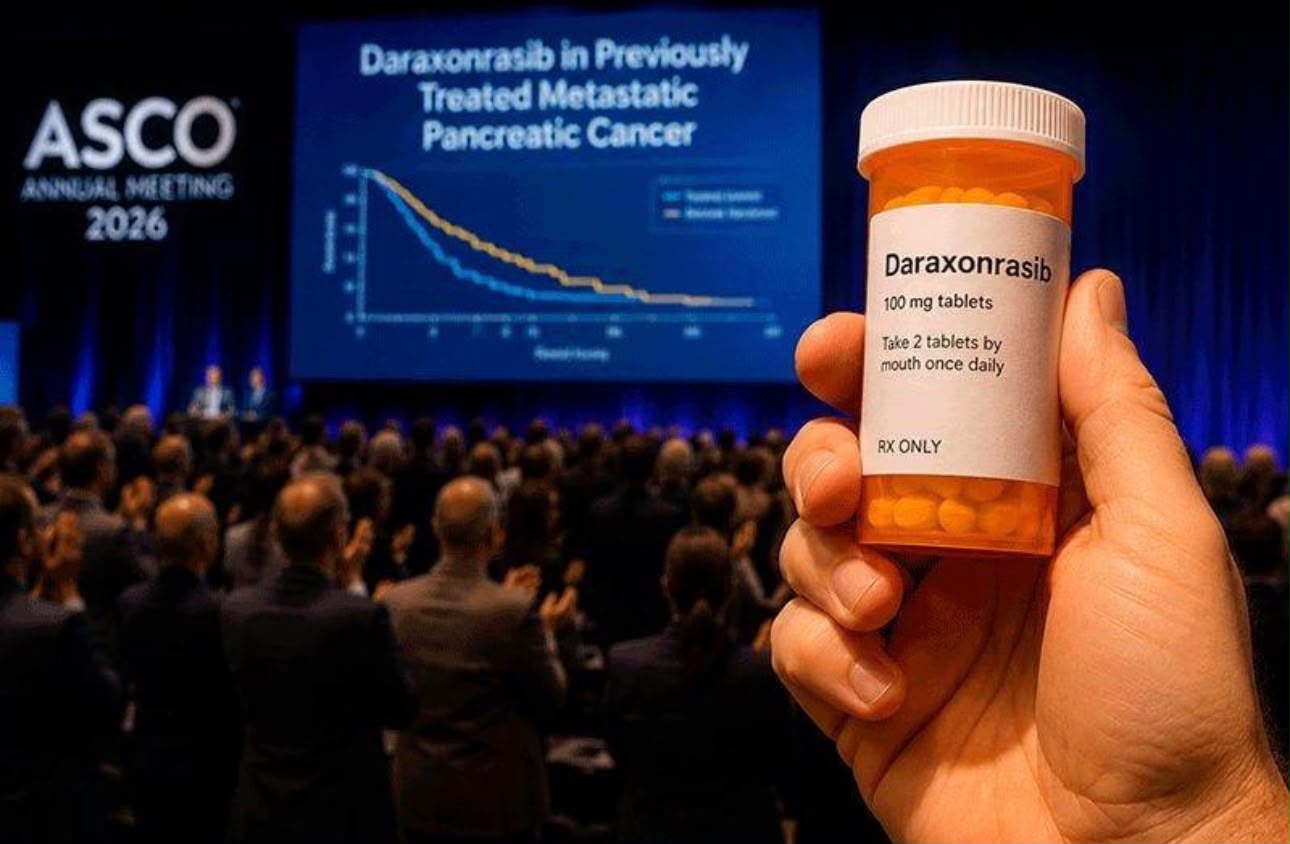
Rasonque pancreatic cancer treatment has entered a new chapter after the U.S. Food and Drug Administration approved Rasonque (daraxonrasib) for certain adults with metastatic pancreatic adenocarcinoma.
The U.S. Food and Drug Administration (FDA) has approved Rasonque (daraxonrasib) as a new treatment option for certain adults with metastatic pancreatic adenocarcinoma.
The approval, announced on August 26, 2026, applies to adults whose metastatic pancreatic cancer has received at least one previous systemic treatment or who are not candidates for multi-agent systemic therapy. (U.S. Food and Drug Administration)
The decision is attracting significant attention because the drug targets the RAS signaling pathway, an important driver of tumor growth in pancreatic adenocarcinoma.
A New Approach to Pancreatic Cancer Treatment
Rasonque is an oral RAS inhibitor developed by Revolution Medicines.
The treatment is designed to interfere with multiple forms of RAS signaling. The RAS protein family plays an important role in controlling cell growth, and abnormal RAS activity is common in pancreatic cancer.
Unlike traditional chemotherapy, which generally affects rapidly dividing cells, targeted therapies are designed around specific biological mechanisms involved in cancer.
The FDA recommends a dose of 300 mg taken orally once daily, continuing until disease progression or unacceptable toxicity. (U.S. Food and Drug Administration)
Clinical Trial Shows Significant Survival Benefit
The FDA’s approval was supported by the RASolute 302 randomized clinical trial, which included 500 patients with metastatic pancreatic adenocarcinoma whose disease had progressed after one previous line of systemic therapy.
Patients were assigned to receive either daraxonrasib or a physician-selected standard chemotherapy regimen. (U.S. Food and Drug Administration)
The results showed a substantial difference in overall survival.
Patients treated with daraxonrasib had a median overall survival of 13.2 months, compared with 6.7 months for patients receiving standard chemotherapy.
The reported hazard ratio was 0.40, with the difference reaching statistical significance. (U.S. Food and Drug Administration)
Progression-Free Survival Also Improved
The benefit was not limited to overall survival.
Median progression-free survival was 7.2 months among patients receiving daraxonrasib, compared with 3.6 months among those receiving standard chemotherapy.
The objective response rate was also higher with the new treatment: approximately 30% compared with 11% for standard chemotherapy. (U.S. Food and Drug Administration)
These findings suggest that the treatment can delay disease progression and produce measurable tumor responses in a portion of eligible patients.
What Makes the Approval Important?
Pancreatic cancer remains one of the most challenging cancers to treat, particularly after it has spread to other organs.
The approval is significant because it provides another option for patients whose disease has already progressed following previous systemic treatment.
The FDA described Rasonque as a first-in-class targeted therapy for metastatic pancreatic cancer. The agency also granted the drug Breakthrough Therapy and Orphan Drug designations. (U.S. Food and Drug Administration)
Rasonque Is Not a Cure
Despite the encouraging clinical results, the approval should not be interpreted as meaning that pancreatic cancer has been cured.
Rasonque is approved for a specific group of adults with metastatic pancreatic adenocarcinoma. Individual responses can vary, and treatment decisions depend on factors such as previous therapy, overall health and the characteristics of the cancer.
The clinical results demonstrate a significant improvement compared with the chemotherapy used as the control treatment, but they do not mean that every patient will experience the same outcome.
Potential Side Effects
Like other cancer treatments, Rasonque can cause side effects.
The FDA identifies several important warnings and precautions, including skin and soft-tissue toxicity, stomatitis and other oral disorders, diarrhea, gastrointestinal perforation, interstitial lung disease or pneumonitis, and embryo-fetal toxicity. (U.S. Food and Drug Administration)
The FDA also lists common adverse effects including rash, diarrhea, mouth inflammation, nausea, fatigue, vomiting, abdominal pain, swelling, decreased appetite and hemorrhage. (U.S. Food and Drug Administration)
Patients should therefore receive the treatment under appropriate medical supervision.
FDA Accelerated the Review
Another notable aspect of the approval was the speed of the FDA review.
The agency said the application was approved approximately 6.5 months ahead of the FDA goal date.
The review used the FDA’s Real-Time Oncology Review pilot and Assessment Aid processes. The application was also included in the Commissioner’s National Priority Review Voucher pilot program. (U.S. Food and Drug Administration)
The FDA’s decision reflects the urgency surrounding treatments for serious cancers with limited therapeutic options.
What This Could Mean for the Future
The significance of daraxonrasib could extend beyond this particular approval.
Researchers have spent years attempting to develop therapies capable of effectively targeting RAS-driven cancers. The clinical performance of daraxonrasib provides further evidence that interfering with RAS signaling can produce meaningful results in cancer treatment.
Future studies will help determine how the drug may fit into earlier lines of pancreatic cancer treatment and whether RAS-targeted strategies can be useful in other cancers.
A Significant Step in Pancreatic Cancer Research
The FDA approval of Rasonque represents an important development for adults with metastatic pancreatic adenocarcinoma who meet the treatment criteria.
The pivotal trial showed median overall survival of 13.2 months with daraxonrasib versus 6.7 months with standard chemotherapy, alongside improvements in progression-free survival and tumor response. (U.S. Food and Drug Administration)
For patients and families facing advanced pancreatic cancer, the approval offers another treatment option and demonstrates continued progress in targeted cancer research.
However, the drug should be viewed as a new therapeutic option—not as a universal cure. Patients should discuss its potential benefits and risks with their oncologist before considering treatment.
Medical Disclaimer
This article is for informational and educational purposes only and does not constitute medical advice. Cancer treatment decisions should be made with a qualified healthcare professional. Patients should not start, stop or change any medication based solely on information published online.
